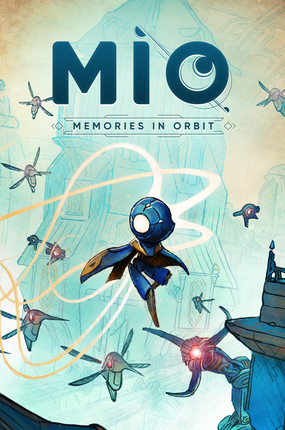
MIO: Memories in Orbit
83.5552SourceCritic score
2026 · Nintendo Switch 2, PC, PlayStation 5, Xbox Series X/S, Nintendo Switch
The published score is adjusted by each outlet's history. See how the score works.
2026 · Nintendo Switch 2, PC, PlayStation 5, Xbox Series X/S, Nintendo Switch
The published score is adjusted by each outlet's history. See how the score works.
MIO: Memories in Orbit combines exploration, combat, and platforming with a unique art style that makes every corner of the ship beautiful. Its demanding challenge and customization through modifiers will reward patience and mastery of its mechanics. For fans of the most demanding Metroidvania genre, seeking a deep, dense game with its own distinct identity, this adventure is a highly recommended experience.
MIO: Memories in Orbit is a metroidvania that is aware of its influences and does not seek to reinvent the genre, but rather works with great care on all its key aspects. The traversal is extraordinary, the level design is inspired, and the art direction is top-notch. It is a work that demands attention, curiosity, and dedication, but it rewards you with moments of genuine beauty. Douze Dixièmes, with a small team and a clear vision, has managed to craft a title that demonstrates how much passion can make a difference. It is a journey between decadence and hope that deserves to be experienced to the fullest.
MIO: Memories in Orbit is an entertaining game that will give you so much fun, provided you're more than averagely good at platforming and know how to fly around with your character using all the environmental advantages.
Despite some poor choices and an unreliable mechanic, not to mention the annoyance that are the tremors, I still had a great time with Memories from Orbit, basking in its gorgeous visuals and memorable characters, and consider it as one of the better Metroidvania titles in years. That said, its issues are wildly apparent, and while they could be patched in the future, the title at launch is what it is, a fantastic game held back by some severe accessibility roadblocks.
MIO: Memories in Orbit effectively balances melancholic and comedic storytelling through a visually striking experience. Mio’s dynamic design shines, especially during boss encounters, while strong world-building and exploration are slightly held back by platforming issues and overly hidden progression paths.
Even after finishing the game and getting the sense that much has already been discovered, there is still so much to explore.
MIO: Memories in Orbit is outstanding. Douze Dixièmes have managed to nail the difficult balance between teaching players just enough while still stepping back and letting the player learn on their own in a world crafted to support them. The platforming is precise and challenging, but every obstacle is fairly designed, rewarding skill and perseverance. With a backdrop of gorgeous art, standout music and thoughtful world design, MIO: Memories in Orbit is a phenomenal example of just how good Metroidvanias can be.
A sensitive and carefully crafted metroidvania experience, notable for its atmosphere, fluidity and coherence, and whose greatest strength lies in how it makes you feel as you explore it.
MIO: Memories in Orbit is a must-have addition to even those who aren't familiar with the genre but love a good story and a good challenge. This brings a fresh perspective to the genre and leaves you wanting more.
MIO: Memories In Orbit is a game that gets better the more you play it. It’s at its best when you’re exploring, unlocking new ways to move, and slowly figuring out how everything fits together. Some parts can feel uneven, and a few moments drag more than they should, but the core experience is strong enough to keep you going.
MIO: Memories in Orbit stands out as a visually stunning metroidvania, delivering one of the most striking art directions in recent years. Its watercolor-like aesthetic, paired with strong sound design, creates a memorable and atmospheric journey. While clearly inspired by Hollow Knight, MIO carves its own identity by being more accessible, though some combat and checkpoint design choices can frustrate. The narrative is intentionally cryptic and may not resonate with everyone, but it complements the game’s melancholic tone. Even with its flaws, MIO emerges as a confident, creative, and impressive early highlight of 2026.
MIO: Memories in Orbit hits all the hallmarks of a Metroidvania. Through excellent visuals and setting, you explore a place that feels alive as you restore it to functionality. Even at its most aggravating, Mio is difficult to dismiss. The game's visual identity is striking, and the spacecraft's transformation as it comes alive is excellent. There's a great sense of atmosphere that's reinforced as you keep moving forward, that eventually gives out because of uneven and frankly, unnecessary combat.
MIO: Memories in Orbit is a metroidvania that dares, stumbles at times, yet never loses its strong, distinctive identity. It’s a journey of wonder and frustration, poetic highs and abrupt halts, as if the Vessel itself breathed in fits, demanding the same resilience it asks of its tiny mechanical hero. When the game stops putting up barriers and lets exploration flow, it reveals a magnetic atmosphere, satisfying combat, and an art direction that lingers. It’s not for everyone, nor does it try to be. But those who embrace its harsh opening and taste for punishing design will find a solid, captivating experience filled with moments of genuine awe. Imperfect, yes, but courageous—proof that even its missteps hide sparks of originality.
MIO: Memories in Orbit is a metroidvania with great personality, capable of standing out in a crowded genre thanks to extraordinary aesthetics and an original movement/combat system.
MIO: Memories in Orbit delivers a fantastic experience within the metroidvania genre, combining excellent exploration with a strong audiovisual identity. Even with limitations in the variety of common enemies, the game makes up for it with bosses, a beautiful soundtrack, and an intriguing world that encourages curiosity from start to finish.
Combine this with some incredibly tight platforming and combat, and MIO: Memories in Orbit earns its place in the pantheon of worthwhile Metroidvania jaunts. As such, it’s a small-scale sci-fi odyssey I won’t soon forget.
The game is one of those experiences that could alienate some players while captivating others in a profound way. If you enjoy melancholic settings, subtly hinted-at stories that offer clues toward a broader understanding, and a sci-fi setting, then it might be right up your alley.
MIO: Memories in Orbit is a gorgeous, exploration-driven platformer that thrives on your curiosity. What starts as a dark, confusing journey slowly unfurls into a vibrant world packed with secrets, hidden bosses, and environmental storytelling that rewards thorough exploration. While combat mechanics remain simple, fluid movement, challenging boss fights, and a richly atmospheric ship make uncovering the Vessel’s mysteries consistently satisfying—for players willing to get lost along the way.
"An Immersive and Distinctive Metroidvania" MIO: Memories in Orbit delivers a powerful Metroidvania experience built on exploration and precise movement within a stunning visual science fiction world. The environmental narrative and art design are its strongest points, while the combat suffers from limited development and some repetition. Despite this, the game offers an enjoyable adventure that can last for dozens of hours and is geared towards fans of exploration and challenge.
MIO: Memories in Orbit is an impressive Metroidvania that stands out above all for its breathtaking hand-drawn graphic style and innovative movement system.
MIO: Memories in Orbit is a dark, challenging Metroidvania Soulslike that perfectly understands what makes this genre so much fun. Combat feels precise and weighty, with fantastic enemy design and one of the most enjoyable Metroidvania maps seen in years. Traversal is incredible, and you'll be in awe of its wonderful music. Sadly, MIO also continues to use outdated Soulslike mechanics, including long, arduous boss runbacks, and the upgrade system is interesting from a thematic standpoint, but ultimately pretty dull.
It occasionally uses those worn tools to achieve something profound. [Issue#421, p.120]
Mio: Memories in Orbit offers a particularly solid experience for those looking for good, high-quality 2D action platformers.
Traipsing through MIO: Memories in Orbit’s gorgeous world is a constant wonder.
This is a Metroidvania game crafted with great care and attention to detail. If you enjoyed titles like Ori or Hollow Knight, you’ll certainly love MIO. It’s more accessible than the two mentioned above, but that doesn’t make it any less of a game. If you’re a fan of the Metroidvania genre, you simply must give MIO: Memories in Orbit a go.
Imaginative space Metroidvania, with beautifully escalating mobility, distinctive design, and plenty of good ideas straight from the belly of a dying spaceship.
MIO: Memories in Orbit leaves a strong first impression and continues to deliver quality content throughout, despite a few questionable design choices here and there. Some clever level design, a fantastic soundtrack, and a gorgeous art style make the entire experience worthwhile.
Desolate but beautiful metroidvania MIO: Memories In Orbit nails the fundamentals of a lot of inspiration. Whether its precision platforming, finding shortcuts, soulslike bosses or wonderful evocative soundscapes, this one is well worth your time if you are a fan of the genre.
With many great games, I am eager to shout from the rooftops to get as many people as possible to play. I sincerely enjoy Mio, but I’d also be extremely hesitant to recommend its rigors to all but very experienced players, eager for platforming, bosses, and exploration that are often more chore than satisfaction. However, if that kind of thing sets your heart aflutter, Mio should be very high on your list of must-plays.
Finding its footing among the giants of the genre, MIO: Memories in Orbit manages to be a great piece of interactive art. Its somewhat floaty controls might take a moment to get used to, but any awkwardness quickly fades in the face of the game’s many strengths. The hand-painted Vessel is gorgeous; its narrative, haunting. Even with a few quirks, it’s impossible not to get swept up in its orbit.
Even though a high level of challenge is part of the essence of MIO: Memories in Orbit, there's much more to it than just that: some of the most beautiful visuals in games of this type, excellent world design, secret locations that demand keen attention, a well-built setting, and exciting boss fights to face. However, even if the ambition to create a punishing experience may be consistent with the narrative context, it ends up posing a potential obstacle to enjoying all the other great features this game has to offer.
MIO Memories in Orbit is undoubtedly a wonderful surprise and an invitation to feast your eyes and ears. It's a game of rare artistic intensity that exudes genuine poetry throughout. You'll enjoy losing yourself in it for dozens of hours and exploring the sometimes sprawling depths of its inspired environments. Beneath its more than charming visuals lies a highly effective Metroidvania that borrows good ideas from various sources and applies them flawlessly with great precision. The execution is excellent, but the gameplay lacks personality, which truly contrasts with everything else. While you'll discover a profoundly unique world, you'll also have the feeling of having played it before. But it's hard to fault it for that, especially if you're a fan of the genre, as the journey is well worth experiencing.
MIO: Memories in Orbit feels like a game made with confidence. It knows it’s not for everyone, and it doesn’t try to be. It’s quiet, patient, and sometimes a little stubborn in how much it refuses to explain. If you enjoy metroidvanias for their atmosphere, exploration, and sense of place, this game is absolutely worth your time. If you need constant action, clear objectives, and a strong narrative push, you might bounce off it.
MIO: Memories in Orbit is a game of contrasts — visually an absolute masterpiece with a handcrafted watercolour aesthetic that sets new standards for indie titles, paired with precision platforming that is buttery smooth for those willing to accept its challenge.
With its strong art direction, cohesive world, and well-balanced difficulty, MIO: Memories in Orbit proves to be a very satisfying experience. Its deliberately slow gameplay won't appeal to everyone, especially the combat, but it's justified and becomes quite engaging, making you want to invest the ten or so hours needed to complete it. It's a solid little Metroidvania that has a lot to offer, despite a few flaws and a finale that we had hoped would be more spectacular.
MIO: Memories in Orbit is a beautiful Metroidvania with strong world-building and clever design that will appeal to genre fans, but its overly slow pacing sometimes undermines an otherwise memorable experience.
MIO: Memories in Orbit is an example of a safe and very player-friendly Metroidvania with medium-difficulty bosses and flexible difficulty settings.
MIO: Memories in Orbit is an extremely demanding Metroidvania that leaves no room for mistakes. This is not a game for players looking to relax while playing. The brutally challenging platforming sequences and punishing boss fights can completely discourage you from continuing. The game unnecessarily punishes thorough exploration by draining health points and removing earned currency. It feels like difficulty was forced into the design, even though the game didn’t actually need it.
MIO: Memories in Orbit is very much a release where ambiance and exploration are top dogs of the experience. Whether you’re in a more lax state of exploring the map or trying to surmount a challenging sequence of whirling saws and pitfalls, moving around MIO’s map is a great time thoroughly enhanced by the game’s impressive rendering of its world and an immersive soundtrack. Unfortunately, these successes overshadow the title’s combat and progression mechanics. There will be a lot of familiar elements to those with prior metroidvania experience, and while they’re all implemented serviceably, they simply don’t do as much heavy lifting as the platforming, world building, and music.
Well-worn genre tropes give way to surprising hidden depths. A complex, flawed, gorgeous, and remarkably generous game that will surprise and delight even as it frustrates.
MIO: Memories in Orbit is a game that stands out for its contrasts. It has some of the best movement and discovery in the genre, and the audiovisual package is so beautiful that it makes you want to get lost. But its restricted combat depth and sometimes punishing way of moving around keep it from being the best Metroidvania game ever.
MIO: Memories in Orbit features a beautiful and artistic world, inspired by paintings, comics, and sci-fi, that is rewarding to explore, and the combat is satisfying. It ticks all the green signals of a brilliant Metroidvania and is the perfect game to start your 2026 list of great games to complete. The levels are brilliantly designed, and the enemies are challenging and look cool. It also features an excellent soundtrack with a brilliant audio design that completes an amazing Metroidvania experience. It is still an indie game, and some elements do tend to show that. Still, I loved playing it, and if you like playing Metroidvania titles, MIO: Memories in Orbit is the perfect game for you to jump into.
In conclusion, I consider MIO: Memories in Orbit to be an excellent product whose true strength lies in its technical and artistic aspects. The creation of this world that cries out “explore me!” combined with a plot that constantly hovers between the said and the unsaid, piques the player's curiosity in a way that few other titles do. However, there are some critical issues. As analyzed, the lack of diversification in the combat system can become monotonous at a certain point in the story, and the use of the Hairpin is often cumbersome and frustrating. Another critical aspect is what we highlighted as a strength and which, in many cases, can become a major problem: the world of MIO is sometimes very cryptic, often too much so. For those who are not used to games that do not provide any tools to understand where you are and where you are going, this can be a big problem. However, MIO remains a game accessible to most, and that is precisely its goal. However, in trying not to distort its essence, it can sometimes make things difficult for those who are not familiar with this type of adventure. In essence, MIO is an experience that invites you to slow down, observe, and let yourself be carried away. It is a title that rewards curiosity and patience. A solid Metroidvania, which finds its strength in atmosphere rather than pure challenge.
MIO: Memories in Orbit is yet another challenging but rewarding Metroidvania for genre fans to sink their teeth into. It suffers from many of the frustrations typical of the genre, such as difficulty spikes and troublesome backtracking, but its unique visual style and intriguing world make up for it.
MIO: Memories in Orbit doesn’t reinvent the wheel, yet it stands out thanks to its rock-solid foundations, immaculate presentation, and a demanding, multifaceted gameplay loop. Its verbose navigation in the latter half and some steep difficulty spikes keep it from being a must-have for every metroidvania fan, but the most dedicated players will find a rewarding challenge and a truly memorable journey in this small French gem.
MIO: Memories in Orbit is an excellent Metroidvania with a few minor flaws, which captivates players not only with its entertaining gameplay, original boss fights and a story that unfolds gradually, but also with its unusual, seemingly 3D visuals and a stunning soundtrack. The game is imaginative and never ceases to surprise, even in the later stages. If you’re a fan of Metroidvania games and sci-fi aesthetics, MIO is definitely a must-have for your games collection.
It doesn’t do much to reinvent the wheel, there’s nothing massive here that separates it from a game like Hollow Knight, but it doesn’t need to, either. I liked that it kept its features and ideas down to the simple fundamentals of the Metroidvania genre, where its appeal rides by on vibes alone. Even after reaching the end of the game, I’m excited to go back and see what I’ve missed, because I’ll bet there’s quite a lot of content I’ve still not seen yet.
A solid Metroidvania in its own right with a uniquely gorgeous aesthetic, MIO: Memories in Orbit is marked by bizarre design choices and a lack of variety to combat.
You may find Mio to be overly familiar, risk-averse, and carrying some platforming and combat flaws, but Memories In Orbit enchants you with its solemn narrative undertones and a luscious art style that should be enticing to anybody curious enough to give this one a shot.
Don't expect to see in MIO: Memories in Orbit an innovative title that reinvents mechanics or fundamentally new aspects because you won't find it here, but the truth is that the game doesn't need to at any point either.
With its gorgeous visual style, exciting gameplay and wistful story, MIO: Memories in Orbit can easily stand next to contemporary metroidvania gems.
I have my issues with some of the pacing choices in MIO: Memories in Orbit, particularly in the game’s early hours, and I think some of its systems don’t add much to the overall experience, but that doesn’t change the fact that this is a beautifully made Metroidvania which always feels excellent in your hands and which makes a lot of smart design choices. Fans who have finished Silksong and are craving their next fix should absolutely give it a look.
MIO: Memories in Orbit turns out to be a lovingly crafted Metroidvania that impresses above all with its dense atmosphere, creative world and unusually precise combat system.
A strong Metroidvania in both audiovisual and gameplay aspects, featuring appealing level design, a dense atmosphere, convincing scope, a tactically interesting upgrade system, nerve-wracking boss battles, and clever features to balance the challenging difficulty level.
MIO : Memories in Orbit is this year's first surprise. Mesmerizing visuals paired with demanding gameplay and an engaging narrative make it a must try metroidvania for anyone remotely interested in the genre.
MIO: Memories in Orbit is one of the best metroidvanias in recent times. Its unforgettable visuals and superb movement mechanics lead to create a memorable experience. If you like the genre, it's a must-play.
MIO: Memories in Orbit, another ‘refined’ game project from French developers. Despite being somewhat uneven in terms of difficulty, it manages to keep the player immersed in its world, and its music and mysterious universe construction make you lose track of time. Whether you love the genre or not, I think you should definitely join MIO on its special journey.
MIO: Memories In Orbit stands as a confident, artistically driven Metroidvania with thoughtful design, expressive movement, and thematic cohesion. Exploring the Vessel feels less like checking off objectives and more like uncovering something forgotten, piece by piece. For a studio stepping into new territory, Douze Dixièmes delivers an experience that feels assured and purposeful. With its evocative world, elegant mechanics, and emotional undercurrent, MIO: Memories In Orbit emerges as one of the strongest early releases of the year, earning a well-deserved place among the genre's modern standouts. It is memorable, distinctive, and absolutely worth the journey.
Finishing MIO: Memories in Orbit leaves an impression that is hard to define immediately, yet profoundly resonant. The game does not rely on spectacular set pieces or dramatic climaxes; its impact is cumulative, emerging through a slow, deepening relationship between the player and the world. Rather than imposing its rhythm, it invites the player to adapt to its measured pace. Immersion is the game’s defining strength. The orbital station is not merely a backdrop to traverse – it is a space to engage with, revealing itself gradually and rewarding careful observation. Progression is equally thoughtful. Abilities are acquired gradually, reshaping how spaces are perceived and experienced. Returning to familiar areas with new capabilities transforms them into fresh opportunities for discovery, sustaining a sense of growth and maintaining engagement even in later stages. The game’s consistency is remarkable. Every element – from art direction and sound design to level layout – aligns with a cohesive vision. At no point does the game compromise its identity or resort to conventional shortcuts, ensuring clarity and integrity throughout. However, this unwavering focus may feel inflexible to those who do not connect with its design language. Emotionally, MIO: Memories in Orbit leaves a subtle but lasting impact. Its narrative is understated, relying on atmosphere, silence, and environmental storytelling rather than overt drama. The game’s emotional resonance often emerges retrospectively, revealing the depth of its reflective, contemplative design. The game’s limitations are purposeful. Combat is deliberately restrained, and its measured pacing may test players accustomed to fast-paced action or varied gameplay. Likewise, the fragmented, interpretive narrative challenges those who favor clear, linear storytelling. Far from being shortcomings, these design choices are intentional, shaping the game’s distinctive character and contemplative identity.
As you might have guessed, MIO: Memories in Orbit is a true favorite. Its fast-paced gameplay, striking art direction, and the deep mysteries of the Ark make it a must-play of 2026. While I’m not usually the type to revisit a game once finished, I find myself here returning to dialogues and rereading item descriptions to learn even more about this fascinating universe crafted by Douze Dixièmes. Exploration is a constant pleasure, guided by a map with organic paths and an unforgettable atmosphere.
MIO: Memories in Orbit stands out in a crowded field of Metroidvanias with beautiful art direction and an engaging narrative. The rewarding gameplay loop and amount of character upgrades provide plenty of replayability for the first standout indie game of 2026.
MIO experiments with a range of ideas within the Metroidvania framework. Some of these changes stand out, while others fail to push beyond boundaries already explored by the genre. Still, its dreamlike world and the sense of mystery that holds it together give these efforts—and their limitations—a distinctive charm.
MIO Memories in Orbit doesn’t try to reinvent the Metroidvania genre. It refines it with confidence, style, and a clear creative vision. If you value atmosphere, exploration, and movement that feels genuinely satisfying, this is absolutely worth your time.
Ultimately, Mio: Memories in Orbit is a refreshing experience that proves there's still room for gentleness in a genre often saturated with violence. While the game loses some momentum towards the end due to a lack of content, it compensates with its lightheartedness and artistic direction. It's a bright and cheerful alternative to the harshness of Silksong, offering an enchanting interlude for all platformer fans who prefer poetry to frenetic action, both in substance and style.
[MIO: Memories in Orbit] is proof that you can indeed start a search action title with a double jump and not feel repetitive and washed-out of ideas, especially when you design around it. It still plays it safe with genre conventions, but does a great job making it look good and fun overall.
Douze Dixièmes' Metroidvania boasts breathtaking visuals in an experience that stands out thanks to its distinct identity. MIO: Memories in Orbit is an experience that captures the essence of what makes a Metroidvania great: the joy of discovery and personal growth in a hostile yet beautiful world. It’s a game that left a lasting impression on me thanks to its fantastic art style.
Despite a few niggles with its progression system, MIO: Memories in Orbit is a wonderful adventure. It looks beautiful, sounds incredible, and feels fantastic to play. The platforming is excellent, exploration is rewarding, and the world is rich with atmosphere and quiet storytelling. If you’re not completely burnt out on the genre, or if you’re feeling that familiar itch to dive back into a thoughtful, well-crafted adventure, this is absolutely one to keep on your radar. MIO is a game that shows there is hope when all seems lost.
MIO: Memories in Orbit is a stunning metroidvania with satisfying gameplay, set in an interesting science fiction setting.
MIO: Memories in Orbit doesn’t reinvent the wheel, and the developers never were looking for that. They simply wanted to put their own spin on it, and they succeeded in that regard. A Metroidvania that clearly shows the games and ideas that inspired it. MIO: Memories in Orbit creates a visually beautiful world, filled with characters you can care about, and gives you a mystery you want to solve, even if some hostile design ideas push back a little harder than you’d like them to.
A strikingly beautiful, sci-fi alternative to Hollow Knight: Silksong, but one which is consistently off the mark when it comes to the balance between difficulty and frustration.
MIO’s quest is both exciting and mellow, with fluid gameplay, stunning visuals, and a soundtrack that often left me feeling much more serene than stressed.
MIO: Memories In Orbit is an uneven yet compelling experience, swinging between genuine engagement and notable frustration. Excessive backtracking and unclear design choices test patience, but a strong artistic direction and striking visual identity often make up for the rough edges. It doesn’t hold the player’s hand, yet its demanding nature delivers real satisfaction, making it a worthwhile metroidvania for those who appreciate challenge and imperfection.
Aesthetically, I really thought that MIO: Memories in Orbit was beautiful. The stunning visuals mixed with the vocals were super pleasing to experience. This element pulls me in as a player, and it grabs my attention from the very beginning. The developers did a fantastic job in this area. If you believe you are the right kind of player, then I happily recommend you pick this one up, just for the visuals alone.
MIO: Memories in Orbit does not bring any real innovation to the metroidvania genre. Moreover, it suffers from a few shortcomings, such as poorly placed checkpoints and a certain lack of precision in the protagonist’s hitbox. Nonetheless, it remains a two-dimensional adventure with a striking artistic vision, a solid pacing, and an effective grasp of the mechanics and design principles that underpin the metroidvania formula.
Douze Dixièmes delivers a metroidvania that goes head-to-head with the best this genre has to offer. From the gorgeous hand-painted art to the moody synth soundtrack, MIO is an audio-visual delight that simply must be experienced.
Despite minor missteps, MIO: Memories in Orbit is an expansive and beautifully crafted Metroidvania. If you can push past those select few progression walls, the game will bloom for you.
An absolutely gorgeous Metroidvania that feels like a mix of the beauty of GRIS with the challenging gameplay of the likes of Hollow Knight
MIO is a compelling adventure with solid platforming and combat. The Vessel is a great place to explore and the mod system adds versatility. A great Metroidvania, then, though its similarities to genre heavyweights stop it from being essential. If you are in the mood for another tightly designed Metroidvania on Switch, however, this is an easy recommendation.
On the Nintendo Switch 2, MIO: Memories In Orbit performs extremely well, whether in handheld mode or docked. It's a very fast-paced game that doesn't suffer from stuttering, framerate drops, or anything of the sort. Technically, it's flawless! The story maintains an aura of mystery that anyone paying close attention can pick up on right away.
It is a disservice to the beautiful world on display here that I was reset back to the start so many times and lost a lot of the meaningful progress I had made. MIO - Memories in Orbit is at odds with itself too much for my personal taste. But I also cannot deny that if you are a fan of this particular genre, MIO is one that should not be overlooked.
Indie gaming reached new heights last year with Hades 2, Hollow Knight: Silksong and Clair Obscur: Expedition 33 offering thrilling stories that take place in lovingly-crafted worlds for a reasonable price. That indie renaissance continues with MIO: Memories In Orbit, an intriguingly challenging 2D platformer which looks, sounds and handles just as well as the genre’s greatest hits.
MIO: Memories In Orbit is a visually striking and mechanically rich metroidvania that rewards patient, experienced players with its challenging combat and vertical mobility. Set aboard a derelict spaceship with a hauntingly beautiful hand-drawn aesthetic, the game delivers a memorable sci-fi journey bolstered by fluid movement and smart encounter design. While some systems fall short of their potential and the storytelling remains minimalistic, MIO offers a distinct experience for fans seeking depth and atmosphere in their exploration.
MIO: Memories in Orbit is a sure bet as a Metroidvania that loves mood, smooth movement, and having its own look. It takes a lot from classics in the genre, which can be a bad thing, but it stands out through design and feel.
The Vessel is on the verge of shutting down. The android’s forgotten past and the ship’s secrets await you. Get ready to lose yourself in a labyrinth where each section represents a different organ.
If you love the Metroidvania genre not just on the surface but deep down, MIO: Memories in Orbit is a game so detailed, polished, and content-rich that it can practically feel like paradise. It tells a highly original story, delivers a feast both visually and sonically, and even after finishing the main narrative, it offers so much to do that you won’t want to put it down before fully wringing it dry - assuming, of course, that the occasionally nonsensical difficulty doesn’t leave you tearing your hair out first.
If you love the Metroidvania genre not just on the surface but deep down, MIO: Memories in Orbit is a game so detailed, polished, and content-rich that it can practically feel like paradise. It tells a highly original story, delivers a feast both visually and sonically, and even after finishing the main narrative, it offers so much to do that you won’t want to put it down before fully wringing it dry - assuming, of course, that the occasionally nonsensical difficulty doesn’t leave you tearing your hair out first.
MIO: Memories in Orbit is a challenging Metroidvania with a strong atmosphere, which is likely to appeal especially to fans of the genre.
MIO: Memories in Orbit is an outstanding Metroidvania that perfectly understands the genre. It may not be overly innovative, but it does everything brilliantly, especially its world design, progression, and balance between exploration, platforming, and combat. Its interconnected setting is a real delight, and its art and sound constantly elevate the experience. Play it.
MIO: Memories in Orbit is a competent Metroidvania that, overall, manages to accomplish almost everything it sets out to do with quality. Even if it stumbles here and there, the game does enough well to captivate us throughout its duration.
MIO tries to shake up the Metroidvania formula in a few interesting ways. Some of its design choices may not appeal to everyone at first, but the challenge ultimately pays off. Fans of the genre willing to stick with it will likely find something to enjoy.
MIO: Memories In Orbit is a deceptive experience that lulled me into thinking that it might be retreading some of the roads that had already been masterfully done by its genre-siblings, but only a few hours had me appreciating every crevice and finely realised detail throughout its lush world. It manages to stand all and establish itself as a fantastic metroidvania that draws upon the strengths of the genre, while creating a world all its own.
Brutal and beautiful. Those are the two words that describe MIO: Memories in Orbit. The game offers a stunning world that’s matched by an equally gorgeous soundtrack, while the level design, enemies, and bosses force you to learn and adapt if you want to survive.
MIO: Memories In Orbit is an intriguing sci-fi metroidvania set on a spaceship full of intelligent machines.
MIO: Memories In Orbit is a visual masterpiece that proves you don't need hundreds of employees to create a unique world. The hand-drawn splendor of the Vessel immediately sucks you into a mystery that forces you to explore every corner. Although the story remains a bit vague at first and the real genre veterans may not find the biggest challenge, the game offers a perfect balance between frustration and satisfaction for the average player. Thanks to the smart mod system and smooth gameplay, every victory in a bossfight feels deserved. Are you a fan of metroidvanias or are you simply looking for an atmospheric adventure in which you can lose yourself? Don't let MIO pass you by. It is an impressive achievement of Twelve Dixièmes that tastes for more.
A fun Metroidvania with an Art Nouveau-inspired presentation
MIO: Memories in Orbit boasts spectacular visuals, a gigantic world, a unique atmosphere, and addictive gameplay. It demands patience and persistence, and not everyone will be able to handle the difficulty or the constant backtracking. But those who get into the spirit of it will find a profound, artistic, and memorable experience that easily ranks alongside the genre's greats.
The game offers an enjoyable experience combining visual and audio appeal with a compelling story, alongside minor gameplay issues, but stands as a promising start for this genre this year.
MIO: Memories in Orbit is a masterpiece. It is one of the most beautiful games ever made and already a strong contender for one of the best games of the year.
Charming and clever, MIO: Memories in Orbit is an efficient metroidvania that delivers high difficulty and occasionally poorly balanced challenges.
Mio: Memories in Orbit surprised me in the best possible way. As someone who doesn’t usually play platformers or Metroidvania games, I went in unsure of what to really expect. What I found was a beautifully crafted experience that pulled me in through its atmosphere, movement, and quiet storytelling.
Android MIO has to clean up a spaceship full of dangerous machines. You'll sweat, but it's not in vain.
Android MIO has to clean up a spaceship full of dangerous machines. You'll sweat, but it's not in vain.
MIO: Memories in Orbit takes place in a fascinating world, and its story is often beautiful. If there was no combat, it would be a substantially better game. But there is, and it is not. Like all Metroidvanias, MIO: Memories in Orbit asks you to imagine the Vessel as a place that was once wondrous. But I could not imagine a world where I was happy to play in its ruins, no matter how beautiful what’s left of it was.
There’s a reason Beckett’s estate demands that all productions of his work follow his stage directions to the letter, as they’re as integral to the text as the dialogue. A sense of environmental storytelling similarly drives MIO, justifying the scale of the massive biomes and the sometimes frustrating ways in which you have to backtrack through them. It’s necessary to force players to repeatedly take a minute-long elevator ride into and out of The Vessel’s depths, because it drives home just how big (and how empty) it is. Hopeless as things may seem, even the comparatively small Mio is still capable of carrying a spark of hope.
That said, in spite of all of these caveats, I’m still going to recommend MIO. Do not get it twisted: this game is hard. It will challenge you, it will take your wits to the breaking point, and it will require navigating some design choices that seem absolutely insane. But once it finally clicks for you, it becomes one of the most addictive platformers you’ll ever play. Just be prepared to die a lot. Because you will.
If, like me, you are a Metroidvania geek, you’ll have a great time with MIO, just as long as you don’t come in with too high of an expectation, and for everyone else – especially people who turned away from Silksong – this might be the Metroidvania you’ve been looking for.
I enjoyed Mio: Memories in Orbit more than I expected. I thought it would be like all the other metroidvania titles out there, and I was wrong. The game has a beautiful story, where you wake up on a ship and try to figure out where to go and what to do on your own. It involves a lot of exploration, and you always need to be on your toes, because you never know what might happen next. The game looks great, it’s fun to play and it has a nice soundtrack to boot. With that in mind, there are some downsides, like design choices such as limited healing options or punishing difficulty at times can end up being frustrating. But that didn’t deter me from having one heck of a time with this game. Platforming is very satisfying, the visuals are excellent, and the progression manages to keep combat fresh, since you always end up swapping between modules and experimenting with them.
IO: Memories in Orbit is a high-quality metroidvania. The ship itself is enormous, hiding countless secret corners, and uncovering the fate that befell it is genuinely fascinating.
Mio: Memories in Orbit is an elegant and rigorous metroidvania that puts all its focus on exploration and precision. Its world is fascinating to traverse, the movement system is solid, and the bosses provide a genuine challenge. The narrative, however, remains in the background, and the combat system lacks meaningful evolution over time, staying consistently minimal. This is a game that asks a lot from the player and doesn't always return an equally strong emotional engagement, but it still manages to leave a mark thanks to its visual identity and the coherence of its design.
MIO: Memories in Orbit is a gorgeous, fluid, and intriguing metroidvania that succeeds on almost all fronts. The intriguing story hooked me in, while the fantastic traversal and platforming mixed well with the simplistic combat to create an engaging experience. The fast travel and respawns could be a little unforgiving, and I wish there were more parts to further upgrade MIO to continue experimenting, but it was still fun nonetheless.
The French games industry is obviously on a high after Clair Obscur: Expedition 33, and MIO: Memories in Orbit continues to carry the torch for our Gallic friends. MIO: Memories in Orbit is unlikely to win any awards for gameplay originality, but in 2026 it will take some beating on art direction and soundtrack. MIO: Memories in Orbit is a charming, ethereal journey that any adventure fan should embark upon.
For a game to break through it has to be not just good, but unique. It has to marry smart, proficient design with a legitimately interesting and distinctive story and aesthetic. It’s a high bar and MIO: Memories In Orbit sails right over it. There are no humans in its sci-fi, but sci-fi is rarely this human—the hands of its designers rarely this evident in a game.
MIO: Memories in Orbit is a beautiful and substantial Metroidvania with excellent presentation and fluid gameplay that avoids becoming frantic. It's a shame about the trial-and-error platforming sections and the overly cryptic exploration, but fans of Metroidvania games will find plenty to enjoy (though you might want to keep a guide handy).
MIO: Memories In Orbit will surely go down as one of the best Metroidvanias of 2026, despite the year being so young. The movement and platforming are top-tier, the vibe immaculate, the map complex, and the combat/boss fights fine-tuned. I wish the story was a little more fleshed out, but this is still a world and journey 100% worth experiencing for any fans of the genre.
From the gleaming towers of the city to the vibrantly lush trails in the garden, I gleefully sailed and fought my way through MIO: Memories in Orbit. Its stunning art style perfectly offsets the tragic narrative. I found it so hard to put down and became so invested in the world’s fate that I couldn’t accept its death. Instead, I searched for an option the game graciously offered for my persistence. Though either way, the conclusion is pierced with hope and sadness.
The exploration and mesmerizing art style make MIO an unforgettable experience for fans of the genre.
MIO: Memories in Orbit is a visually stunning Metroidvania that nails exploration, atmosphere, and that “one more room” feeling. The module-based progression keeps combat fresh, and the story has enough mystery and emotional weight to keep you pushing forward. But the game isn’t without issues, including unclear direction, overly punishing platforming sections, limited accessibility options, and a frustrating story moments that can remove hard-earned health upgrades. It’s a great experience overall, albeit with a few flaws.
MIO: Memories in Orbit is a visually stunning Metroidvania that nails exploration, atmosphere, and that “one more room” feeling. The module-based progression keeps combat fresh, and the story has enough mystery and emotional weight to keep you pushing forward. But the game isn’t without issues, including unclear direction, overly punishing platforming sections, limited accessibility options, and a frustrating story moments that can remove hard-earned health upgrades. It’s a great experience overall, albeit with a few flaws.
Even with all my personal gaming red flags, I really enjoyed playing through the game because it was quite the cinematic experience. People who love this kind of storytelling and gameplay will get even more out of the game than I did.
MIO: Memories in Orbit is as beautiful as it is punishing. With an abundance of adventure, solid gameplay and music that’ll make your ears tingle, it’s an excellent addition to the Metroidvania genre, only the combat falls a little short.
MIO: Memories in Orbit is a visual and auditory masterpiece that offers a solid, if occasionally frustrating, Metroidvania experience. With a distinct art style, a compelling "chip" customization system, and satisfying traversal (once unlocked), it stands as a strong entry in the genre. However, slow pacing, backtracking issues, and some odd combat design choices keep it from perfection.
MIO: Memories in Orbit is a demanding, luminous journey through decay and empathy, one that asks a lot of its players and gives back just enough to make the struggle worthwhile.
Memories in Orbit delivers outstanding atmosphere and exploration, held back slightly by combat that never quite evolves.
MIO: Memories In Orbit is an early contender for one of the most memorable games of 2026. It is an incredibly challenging game to play, with combat being a highlight, even if some platforming section can be frustrating. It looks fantastic, though, and the story is well told. MIO: Memories In Orbit draws you in, and does not let go easily. It is hard game but the journey is worth experiencing.
The start of the year used to be a barren place for exciting new games, but MIO: Memories in Orbit disputes that statement. It’s thrilling to play, a Metroidvania where you can feel confident giving yourself over to the development team as they present surprise after surprise.
Reminiscent of French Symbolist literature, Mio: Memories in Orbit masterfully weaves an ambiguous, poetic narrative into intricate Metroidvania exploration. While the story remains elusive, the game’s artistic sensibility and elegant level design create a deeply immersive experience that rewards patience. For players who cherish atmospheric storytelling and the thrill of discovery, this journey through a rusting ark offers a perfect balance of aesthetic beauty and genre satisfaction.
MIO: Memories In Orbit was one of my most anticipated games last year after playing the demo, and I’m happy to say it more than lived up to the hype. For fans of the genre, this is a must-play. The art, the music, the vibes, the story, all hit the mark. Slowly unravelling the mystery of the slowly decaying Vessel, and witnessing the impacts of that first-hand, is an emotional experience. I was pushed towards my gaming ability limits at times, and my patience was tested, but with focus and determination I was able to overcome those hardships and felt a real sense of satisfaction. While there are a couple of assist options in the menu, to wear bosses down over time or heal Mio while on the ground, you are fully on your own in platforming. In fact, I had to really dial in to my old Celeste muscle memory to get past some of the trickier set-pieces. Even still, fans of the genre are sure to find a gem. I didn’t give out our top award last year, despite playing some great games. This year begins much differently, though, as MIO: Memories In Orbit receives a Thumb Culture Platinum Award.
MIO: Memories in Orbit for me was a very fun experience that provided a lot of challenges in terms of combat, while also providing me with the option to downscale the difficulty if I needed to in rather unique ways. The biggest draw for me was the beautiful world that the game is set in, with the incredible watercolor detail and the breathtaking views that were waiting around each corner. The story was also very good and was a very big tear-jerker, but it was very challenging to ensure I saw it all due to the hidden lore pieces scattered around the game.
MIO: Memories in Orbit demands patience, offering a serene and strange world to explore, great characters to meet, and some of the better platforming mechanics I’ve played with. It lacks a lot of familiar genre mechanics, which can make it feel punishing for some, especially those who want to get through the game fast. If you find that you enjoy taking your time in MIO: Memories in Orbit, then you’ll have a lot of fun.
Memories in Orbit is a bold and successful attempt to bring something new to the world of Metroidvania games. If you are looking for a real challenge and a work of art that hides secrets around every corner, don't hesitate to give it a try. The gameplay is impressively solid, and the art design, inspired by the work of French comic book artist Moebius, is undoubtedly the most striking positive aspect of MIO. There is some excessive lengthiness in the exploration phases, but these are flaws that can be expected from a debut work.
MIO: Memories in Orbit starts with confusion and punishment (and it will test your patience), but if you stick with it, it rewards you with a deep sense of mastery across its platforming and combat and a rich sense of discovery across its stunning world and storytelling. The lack of hand-holding, which annoyed me at the start, eventually instilled a genuine sense of wonder as I uncovered the world on my own terms, and when things click (and they will), it’s hard to put the controller down. It’s just a real blast to play, and whilst it’s a little bit on the long side, MIO: Memories in Orbit NEVER gets boring.
MIO: Memories in Orbit is a great Metroidvania, and above all, an absolutely beautiful video game. Navigating the ship, discovering its different locations, and finding their interconnections is as satisfying as the protagonist's movement and the level design. The striking resemblance to its inspirations (Hollow Knight and Ori), a somewhat uninspired bestiary, a certain lack of polish, and the absence of truly memorable moments don't detract from this challenging game that tests both skill and patience. However, the difficulty adjustments, while not making it a cakewalk, make it more manageable for those who, drawn in by its art style or its inclusion on Game Pass from launch, are simply looking for a beautiful and melancholic audiovisual and narrative experience that may not leave a lasting impression, but is enjoyable every step of the way—even when repeating a boss fight or platforming section for the twentieth time.
I had a great deal of fun while being immersed in the striking world within MIO: Memories in Orbit as it is one captivating Metroidvania. 🥶
Ultimately, what hurts MIO: Memories in Orbit the most is the fact it’s yet another artsy metroidvania in a sea of very similar and (unfortunately for it) better titles. There aren’t that many elements in it that make it stand out from the competition, even though it is, once more, a pretty decent game with great visuals and movement, albeit frustrating when it comes to its combat and progression. Die-hard fans of the genre will easily have a blast with it, but otherwise, this is a game released at a very unfortunate time.
MIO wears its tough-as-nails metroidvania influences proudly, but spends enough time contorting familiar ideas into punishing gauntlets and rewarding patience with dazzling artistic spectacle that it truly comes into its own.
MIO: Memories in Orbit is a charming, enjoyable and perfectly well-made Metroidvania. The core gameplay loop is engaging, and there's enough room for upgrades and mastery of skills to keep the relatively simple combat feeling fun throughout. Some awkward platforming drags down the experience a little, but it's not enough to sour the whole. All in all, MIO feels like a great game for fans of Metroidvania-style games to play, and while it may not exactly reinvent the wheel, it shows that a well made game in the genre can still be addictive and fun.
What is going on in France? The game that conquered the public heart, last year, was Clair Obscur: Expedition 33. It was made by Sandfall Interactiv...
MIO has a lot of features that other games in the genre introduced and found a way to incorporate and make them shine. The modifier system is similar to Hollow Knight or Ori and the Will of the Wisps. The accessibility option that makes each boss a tiny bit weaker after each failed attempt is similar to Hades. The extended platforming sections of the Ori games and Guacamelee are also present. MIO does a fantastic job of taking all these systems and making them their own while wrapping them up in a huge world to explore. This is Douze Dixièmes’ second game which follows their stunning debut, Shady Part of Me, and I can’t wait to see what they do next.
Mysterious intrigue, tight platforming, satisfying combat, and an emotional soundtrack carry you through 20 enchanting hours. It can be overly difficult at times in its optional parts. Whether on Game Pass or a full purchase, MIO: Memories in Orbit is an incredible game and well worth checking out for any action platforming Metroidvania fan.