Death Stranding 2: On The Beach
89.0069SourceCritic score
2025 · PlayStation 5, PC
The published score is adjusted by each outlet's history. See how the score works.
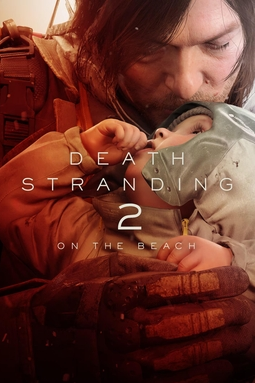
2025 · PlayStation 5, PC
The published score is adjusted by each outlet's history. See how the score works.
If Death Stranding left us wanting more, today we can say the wait was worth it. Death Stranding 2: On the Beach has the maturity, ambition, and heart to become a modern classic, a title that marks a turning point in how we understand interactive art and the power of human connection in video games. It doesn't just live up to the original: it far surpasses it, and that deserves applause.
It's practically the same game as six years ago, but with a different plot and significantly reduced difficulty. Early access to transport simplifies everything, and those who didn't like the previous game because of its slowness will feel more comfortable here. But next time, such a trick is unlikely to work, and you expect something more interesting from Kojima than just a repetition of what has already been done.
Death Stranding 2: On the Beach is a divisive, challenging work that never tries to please everyone. And because of that, it succeeds in leaving a deeper mark. Hideo Kojima returns to talk about connection, but this time he does so in a world that no longer needs to be united: he does so in a world that must learn to live with its own fractures, its own shadows, its own broken memories. It is a video game about mourning and hope, about collective choices and personal sacrifice, but one that manages to remain a game in the purest and deepest sense of the word. Play-wise, the title consistently evolves the original formula, incorporating new mechanics, more dynamic rhythms and a more layered structure, where the narrative and management components meet without ever clashing. Not everything is perfect: some sections still feel too slow, certain gameplay choices may be off-putting to those expecting more continuous action, and some narrative passages risk being overly cryptic. But these are small cracks in a work that manages, once again, to be visionary, fragile, and powerfully human. The technical compartment on PS5 borders on excellence: lightning-fast loading, visual cleanliness, granitic stability, without sacrificing the artistic detail that makes every shot worthy of a photo shoot. DualSense is put to excellent use, as are 3D audio and haptic feedback, making every step, every raindrop, and every beat of the BB's heart a living part of the experience. Ultimately, Death Stranding 2 is much more than a sequel. It is a second work that rewrites the meaning of the first, a new journey that does not erase the previous one but transforms it, reworks it, sublimates it. It is one of those games that asks for trust, time, and a hint of surrender. But if you let go, On the Beach manages to touch chords that modern video games rarely dare to touch.
While the Gameplay is more accessible, the story of Death Stranding 2 transforms into a completely new beast, once again breaking the limits of the medium.
Improved in almost all ways compared to the original but without removing what made fans love the original.
Kojima Productions delves into the ideas of the original game, nuanced and twisting them to stick it to the present without losing or losing its condition of Pure Video Game.
Ultimately, I was a fan of Death Stranding, but I was sceptical about Death Stranding 2: On The Beach. I just wasn’t sure the original needed a sequel after being such a unique AAA experience in a time where we don’t see much originality anymore. Thankfully, I was wrong, and Kojima Productions has delivered one of the best sequels of all time. While it may not have the complete originality of the first game, Death Stranding 2: On The Beach is a better game in every way possible.
Death Stranding 2: On the Beach is a masterpiece that surpasses the original: bigger, deeper, and more challenging. Featuring a captivating story, refined gameplay, and a world full of life and surprises.
Death Stranding 2: On the Beach is an uncompromising, creative triumph. It doesn’t care about trends. It doesn’t follow what’s popular. It dares to be strange, thoughtful, and different. In an industry obsessed with franchises and replicating proven game mechanics, this game feels like a gift, a creative’s vision executed at the highest level. It’s still not for everyone. It never wanted to be. But if you’re someone who values originality, emotion, and design that challenges the norm, there’s nothing else like it.
This game reminds me of Stanley Kubrick's films—a hearty cinematic feast, with its own set of difficulties and struggles as you try to understand and comprehend what's going on in the mind of its mad creator—but it's not necessarily "fun."
Anyone who enjoyed playing Death Stranding will most likely enjoy Death Stranding 2: On the Beach as well. It offers roughly 50 hours of gameplay where you wander across mountains and landscapes, take in breathtaking scenery, and slowly follow the story along the way. Still, I cannot help but wish that Hideo Kojima would move away from some of his more eccentric ideas and return a little closer to his old style. Death Stranding has never really been a mainstream experience, but for players who know exactly what kind of game they are looking for, it remains something that absolutely deserves to be experienced.
Death Stranding 2: On the Beach far surpasses the first entry of the franchise. New elements in the sequel elevate the experience, overcoming the repetitive nature of the gameplay. Death Stranding 2 is a fully immersive game reinforced by its spectacular landscapes and fascinating soundtrack, and every element just feels like it forms a cohesive whole. What separates the sequel from being an all-time great is a mixture of some gameplay aspects as well as how long it takes for the best of Death Stranding 2 to show up. Still, it is a must play game you cannot miss this year.
Death Stranding 2 builds upon the foundations of its predecessor with a more polished and ambitious experience, successfully addressing many of the original’s shortcomings. While its emotionally resonant story stands out, the narrative momentum occasionally falters due to pacing inconsistencies.
Death Stranding 2: On the Beach is a game different enough for those who enjoyed the 2019 installment to admire the evolution that Kojima Productions presents this time around. However, those who didn't connect with the PS4 title will hardly be convinced by what the sequel has in store for us, and that's okay. As spectacular as this game is, it will still divide the community and, like any good work of art, will spark conversations of all kinds. Hideo Kojima has done it once: Death Stranding 2: On the Beach is one of the best experiences of the current generation, and something that defines video games as more than just entertainment. It's a message for today's world, a love letter to the medium, and an exploration of our capacity to lend a helping hand to someone in need.
Death Stranding 2: On the Beach proves that Hideo Kojima can listen to feedback without sacrificing his artistic vision, turning Sam’s journey into something stranger, smoother, and genuinely unforgettable.
Death Stranding 2 truly showcases the power of a well-executed sequel, taking an already robust base and significantly enhancing it. Though not a drastic departure from its predecessor, the myriad new additions and subtle complexities are poised to enrich the player's journey like never before. This potential has already put Death Stranding 2 firmly in the running for Best Game of the Year in 2025.
When I played the original Death Stranding, I called it a double-edged sword: you’d either fall in love with it or be unable to survive even a minute. Death Stranding 2, however, moves beyond that divisive framework. It’s designed to appeal to a wider audience, yet without abandoning the core of what made the original so distinctive.
In a world of solitude, the connections we build are the bridges that keep us alive.
Death Stranding 2 successfully builds upon the original with a stronger narrative, deeper gameplay systems, and a breathtaking world to explore. While its slow pacing and unconventional design won't appeal to everyone, those willing to embrace its journey will find a unique and memorable experience.
It's Kojima at his most Kojima, a visionary building a type of experience that only he can. Death Stranding 2: On the Beach is an adventure worth taking.
Death Stranding 2 elevates every mechanic from traversal to combat, balances heartfelt drama with Kojima’s trademark oddness, and shines with breathtaking visuals, making it a near-flawless sequel.
Death Stranding 2 is a game of incredible grandeur. It follows in the footsteps of its predecessor while bringing enormous improvements to the quality of life of Sam Porter, and therefore of the players… Deliveries that aren’t always fun, hassles, long distances to cover… but all this to tell (extremely well) something so beautiful, so important. We love Death Stranding 2 terribly if we liked the first opus because it manages to make the ordinary extraordinary, by putting us in the shoes of this delivery man like no other, alongside complex and surprising characters, through such a dazzling universe… Because after all, what matters is the journey, right?
While topping the original is tough, Death Stranding 2: On the Beach makes it seem like an easy task.
Death Stranding 2 is a gaming, cinematic and spiritual experience. And on top of that, it's socially engaged. Hideo Kojima does not shy away from quirks, criticism and empathy. And while he can overstep with spectacle or exposition, he has not yet been so mature in his artistic career.
Death Stranding 2: On the Beach reduces the classic Kojima weirdness and expands the gameplay variety and the impressive technical achievements. The main gameplay loop is still tedious in most parts and the more straight forward storytelling will disappoint fans of the first game. If you enjoyed Death Stranding and want to see how the story bits for everyone get unpacked, you should still get it.
Death Stranding 2: On The Beach takes its predecessor's foundation and builds a bigger, better game on top—keeping everything that worked, and improving what didn’t 10-fold.
Kojima Productions’ best project yet is Death Stranding 2: On The Beach, and it’s largely thanks to how refined and an improvement it is on its predecessor, rather than being the perhaps expected unconventional sequel. The star-studded cast and their conjoined chemistry have helped craft a more interconnected and personal world this time, only bolstered by the unbelievably gorgeous, detailed and technically impressive open world where every journey is its own story. Every job and delivery is a delight and an immersive challenge against the greater elements. Picking you up off your feet and prodding you along are all the other players’ structures and creations around the world. In Death Stranding 2, you are never alone. That remains true whether it’s paying respect to those that came before, or paving the future of open world games that Kojima Productions, and even you, the player, are actively doing at all times. What a bright future it is.
Even more spectacular than the PS5 version. If you enjoyed the first one, you’re going to absolutely love this.
Death Stranding 2: On the Beach sticks close to the original’s formula, but tightens up the gameplay and expands your tools. The story leans into Kojima’s usual weirdness, with standout characters and a final act that delivers. It’s familiar in many ways, but still offers something different from anything else this year.
Death Stranding 2 is a massive achievement for Hideo Kojima and Kojima Productions. It elevates nearly everything that made the original such a unique experience. It streamlines the majority of its systems to make them more palatable. It's drop-dead gorgeous and introduces enough new mechanics to feel fresh while never alienating what makes the franchise so special. Death Stranding 2 is undoubtedly one of the best games of the year, and well worth the agonizing six-year wait. This is a game that will be in my rotation for hundreds of more hours. From start to finish, it blew me away. Keep on keeping on.
Death Stranding 2 is a brilliant game in many ways and is similar to the first in ways that could be improved. The narrative is wonderful, it makes us think about life and our choices, a true work of Hideo Kojima. The performances are out of this world. However, the gameplay delivery system, even though it has been improved, ends up getting tiring after many hours of playing through the same empty places. It's definitely not a bad thing that the game is "just a sequel", but it could be as surprising as the first in many ways.
Although Hideo Kojima wants to make games that are somewhat divisive, I find Death Stranding 2 to be one of his most refined and enjoyable works to date. I feel confident this will be recognized as one of PS5’s defining masterpieces.
Although Hideo Kojima wants to make games that are somewhat divisive, I find Death Stranding 2 to be one of his most refined and enjoyable works to date. I feel confident this will be recognized as one of PS5’s defining masterpieces. In the way that we talk about The Last of Us on PS3 or God of War on PS4, I think Death Stranding 2 is an essential title for the PS5 generation.
Death Stranding 2: On the Beach is yet another stellar entry from one of gaming’s greatest minds. The whole team at Kojima Productions has delivered a startling project that is massive in scale, building upon the original’s mechanics in interesting ways.
Death Stranding 2: On the Beach is a bigger and bolder expansion that will once again split fans and critics. The improvements across the board are felt immediately, bringing about a significant amount of much-needed change to the formula. Between the changes to stealth and combat, the new structures you can build, and the new settings, cast, and music, Death Stranding 2 has proven that Kojima is not only on point but also an auteur of the industry. There is nobody like him doing what he does, and I sincerely doubt there will be.
Death Stranding 2: On the Beach may follow a simple premise—like the single line through two points—but it's rich with layers. Hideo Kojima’s latest creation blends survival management, narrative adventure, third-person shooting, brawling, musical elements, and cinematic flair. After 400 kilometers reconnecting a collapsing Australia, it’s clear this is a lavish production, refined from the 2019 original. While the story may falter at times, the gameplay remains compelling—though unlikely to win over those who didn’t enjoy the first game. Still, it’s a masterclass in high-budget creativity, and when “To The Wilder” plays over the credits, it’s hard not to long for more time on those dusty roads.
Death Stranding 2: On The Beach fixes all the issues of the original and takes the experience to a whole new level. The game is flawless in everything it sets out to do and stands as one of the best video game experiences in recent years. If you enjoyed the first game, there’s a high chance you’ll fall in love with this one, as it is undoubtedly one of the greatest games of the entire generation.
Death Stranding 2: On the Beach shows significant improvement over its predecessor, demonstrating a clear maturation of its core ideas. The game delivers a narratively rich experience, with professional actors beautifully portraying profound human values. However, unnecessary missions, repetitive gameplay, and occasionally tedious segments prevent it from achieving masterpiece status. Despite these flaws, it remains a meaningful and successful sequel, poised to attract an even broader audience.
We could try to come up with an eloquent way to say that Death Stranding 2 is great—but that honestly wouldn’t do it justice. What matters is that it’s memorable. It surpasses the original by understanding exactly what made it special in the first place, and builds on that foundation to deliver a game that’s both bold and powerful. In its continuity, it gains strength—enough to stand among those rare, historic titles that don’t resemble anything else out there. This is one you need to experience to understand why some creators are simply different. Kojima, you’ve done it again.
It’s possibly Hideo Kojima’s magnum opus, and it’ll be a long, long time before I stop thinking about it.
Every single criticism I had of Death Stranding has been addressed, allowing this sequel to show the full genius of Hideo Kojima’s vision. His favourite music, the recurring themes he explores, his famous friends, the tribute to Low Roar’s late frontman Ryan Karazija, the nods to his previous work, the post-COVID anxiety imbued into the story, and even the Kojima-made trailers leading up to release – playing Death Stranding 2 feels like making a personal connection with the man himself. He’s reaching out his hand from the other side and there’s little you can do but grasp it. You can feel the brush strokes, and now and then, that wink. A Hideo Kojima wink.
Death Stranding 2, like its predecessor, is a game that is polarizing for many. When you “get it,” like I and many others do, you simply just feel it on an indescribable level and appreciate each of its head-scratching intricacies. If you didn’t “get” the first game, the sequel likely won’t change your mind.
Death Stranding 2 is a phenomenal offering. It's among Kojima's very best work not just for its narrative, but for the near-limitless variability in its gameplay opportunities.
Death Stranding 2: On the Beach, developed by Kojima Productions and published by Sony Interactive Entertainment, is a new journey with a tonal shift compared to its predecessor, as the narrative is smaller in scope and far more personal. On the gameplay side of the tracks, the new game tightens a lot of loose ends from the first game, expands the world of Death Stranding through new environments and gameplay improvements, and exceeds all expectations with how a game should look on PlayStation 5. This is a solid contender for Game of the Year.
Death Stranding 2 is a unique piece of art in the medium. It deals with the universal feeling of loss, our reactions to it and humanity's need - now more than ever - to connect. Death Stranding 2 doubles down on its core ideas to deliver something that's bigger and better than before and there’s just nothing else quite like it.
It takes seeing through the entire story for me to see the full picture. Yes, Death Stranding 2 is anxious about the side effects of mass connection. It isn’t blind to all the ways it can be manipulated and used to rob people of their humanity rather than enrich it. But it doesn’t give up hope even in its darkest self-reflection. It weighs the pros and cons and still comes out with a desire to keep us all together. The danger is out there whether we’re on the grid or not. We may as well stand in the rain together, with a song and a smile.
"A human journey in a fractured world" Death Stranding 2: On the Beach isn't a reinvention, but a subtle and thoughtful improvement. It returns to familiar themes, but it's delivered with a higher level of craftsmanship, beauty, and emotional maturity. While it lacks the boldness and shock of the first game, it makes up for it with a more human and reflective experience. This sequel embodies Kojima's signature style—philosophical, cinematic, and deeply personal. It's a journey worth taking, especially for those who embrace its quiet genius.
The man is a genius and he will be remembered as the game industry’s first real auteur. Miyamoto and many others were great game developers and artists before Kojima, but Kojima is a true, bona fide auteur. Death Stranding 2 doesn’t harm that legacy in any way.
At 36 hours, I practically raced through Death Stranding 2. You could easily spend twice as long on the game. There’s plenty to do. It’s thanks to the asynchronous multiplayer and the much more accessible transport system that I was able to get through it so quickly. But also because “Death Stranding 2” no longer exudes the same fascination as the first instalment. Many elements of the story are too repetitive, and despite new transport options, the gameplay no longer exudes the same originality as it did back in 2019.
Death Stranding 2: On the Beach is a therapeutic, genre-expanding experience that builds on its predecessor’s bold foundation.
As the auteur, Hideo Kojima is at his most unbridled, and as such, DS2 might not be for everyone. With nothing stopping his and his team’s creative vision and their cumulative experiences of game-making, it is one of the best open-world games I have ever had the pleasure of playing, and one that I will be sure to revisit often for the next few years. While the esoteric plot and Kojima’s frequent self-indulgent references and inserts might be distracting and immersion-breaking for some people, the gameplay, visuals, and ambience are its strongest aspects. DS2 is most certainly a GOTY contender, and is truly a work of art that must be experienced if you’re looking for an atmospheric game about traveling through breathtaking views.
A work of art is not defined by perfection, but by the confidence with which it is created, the intent that drives it, and the lasting impression it leaves on those who play, watch, read, or listen. Even if Death Stranding 2: On the Beach didn’t grip me at first as I had hoped, by the end — much like its predecessor — it left me deeply moved and with a strange, immediate sense of longing. Just hours after finishing it, I started it all over again — not out of a need for completion (which I could have continued from my first run), but simply because I still can’t bring myself to leave this world and these characters. To me, this rare kind of involvement — at once interactive, emotional, and philosophical — is what makes video games such a special form of expression.
This is a grand, unwieldy behemoth of a sequel, buckling under the weight of its features and bombast. In lacking a sense of direction, though, it sometimes delivers in unexpected ways. [Issue#413, p.102]
If Death Stranding stood out for being unique, Death Stranding 2 feels like a more mature and polished follow-up. It fixes many flaws from the original and brings smart improvements and new features that make the gameplay more engaging and varied. At the same time, it keeps the game’s signature sci-fi world and delivers a gripping story full of mystery, emotion, and madness. In Death Stranding 2: On the Beach, Hideo Kojima fully unleashes his creativity, resulting in a standout experience that’s among the best of this generation
Death Stranding 2: On the Beach is not a revolution compared to its predecessor, but it is a very coherent evolution, which polishes its mechanics to the maximum, deepens its message and dares to show the cracks in its own philosophy. It is true that there is not much innovation or surprise and we did not expect that from Kojima, and this is a major drawback in a game like this. But the bar was set so high because of Kojima himself.
The sequel to the legendary Death Stranding brings to us exactly what we have wanted – another unique and unmissable experience from Hideo Kojima.
Between its engrossing central loop and genuinely brilliant conclusion, it delivers an affecting mixture of grandiose and heartfelt. Together, it allows you to say something rarely true about big budget games these days, or honestly, most blockbuster media: there’s very little else like it.
Death Stranding 2: On the Beach for PC is now available, with Nixxes Software once again demonstrating its mastery in game porting
Hideo Kojima is set loose in yet another post-apocalyptic delivery adventure in Death Stranding 2; it is definitely more Death Stranding, perhaps more than what was bargained for.
While interesting in its approach, Death Stranding 2 feels more like a retread of its predecessor’s path rather than a bold leap forward. The first game was eerily relevant in a post-COVID world, but this sequel seems to lack that focus.
Death Stranding 2 presented a complete story and crafted it with a human message of very high value, putting all doubts to rest regarding the previous installment through noticeable improvements, and succeeded in its attempts to attract a new audience to the series. With a unique gameplay style that combined traversal, delivery, and combat—which was documented in the previous part's leaks despite the clear update—especially in boss fights within a vast and beautiful world for traversal and delivery. However, it is exhausting and tiring at times. The showcase of the Decima engine technology provided the best presentation of Death Stranding thanks to the prominently featured graphics, which is a strong indicator that the formula presented in the series may be an exceptional experience in the current generation.
A busier, louder, and more emotionally resplendent take on this singular hiking sim.
The result is a game I didn't know I needed or even wanted. Death Stranding 2 is huge, pompous, moving, shocking, inspiring, confusing - and ultimately, and above all, concerned with what connects us and makes us human. Even if that thing is just the sheer joy of an insanely long zipline ride through snow-covered mountains.
Fans of Death Stranding will find more of what they know and love in the sequel - only bigger and better. Those who dismissed the series as a ‘delivery simulator’ probably won’t change their minds. But both camps are likely to appreciate the boldness and freedom with which Hideo Kojima continues to blur the line between game and film.
Death Stranding 2: On the Beach is an ambitious sequel that deepens Hideo Kojima's vision. With improvements to the gameplay, new enemies, unpredictable environments and a strong visual component, it maintains the focus on human connections and introspection. Despite questionable technical choices and unmemorable bosses, the experience remains unique.
Death Stranding 2: On the Beach is an ambitious sequel that deepens Hideo Kojima's vision. With improvements to the gameplay, new enemies, unpredictable environments and a strong visual component, it maintains the focus on human connections and introspection. Despite the questionable technical choices and the less than memorable bosses, the experience remains unique.
Death Stranding 2: On The Beach is not just a sequel, it's a complete reimagining of everything the first game built. More than an evolution, it's a reinterpretation of the journey, the burdens we carry, and the world we try to rebuild. A bold, different, and profoundly human title.
Despite not fielding revolutions, the gameplay demonstrates a solidity that, even if it does not completely compensate for the shortcomings of the story, at least circumscribes its effects, giving the player a well-assorted and valid game bouquet, which offers a different balance between delivery and combat dynamics, managing to enhance both sides of the offer.
Death Stranding 2 is a sequel that is only half successful, which like a tired courier struggles under the weight of an ineffective and, to be honest, painfully weak narrative component. Despite not fielding revolutions, the gameplay demonstrates a solidity that, even if it does not completely compensate for the shortcomings of the story, at least circumscribes its effects, giving the player a well-assorted and valid game bouquet, which offers a different balance between delivery and combat dynamics, managing to enhance both sides of the offer. We are sure that not everyone will appreciate this drift, but in our opinion the profile of the experience benefits from the more refined alternation between "rope and stick". Nonetheless, we find it hard not to consider Death Stranding 2 one of the few "missteps" - relatively speaking - in Hideo Kojima's career.
The franchise will likely always receive a mixed reception. The whole concept simply remains a bit strange. Is part two better than its predecessor? For many, the chances are high that it is. If only because the game plays much more pleasantly. The game has Kojima's DNA down to the deepest recesses of the code, and you have to love that. That being said, for people looking for a cinematic game, this is a good choice.
Death Stranding 2: On The Beach is an unforgettable adventure that I firmly believe sits as one of the greatest games ever created. With an emotional and thrilling narrative, a technically brilliant gameplay system that builds upon its predecessor, and a best-in-class soundtrack, Death Stranding 2 advances the industry forward and innovates. Hideo Kojima and the Kojima Productions team have created something truly remarkable that will be talked about for decades to come.
Death Stranding 2 streamlines a lot of the first game's rough edges, and with Kojima's typical twists and turns is makes for an overall good game. But I can't help to feel a bit disappointed at how safe this sequel was played, this streamlining removed any kind of challenge or obstacles in the game and made up for a less interesting experience overall.
But there's a genuine creative argument driving every aspect of the game, that might not convince everyone, but it's enough to make you curious. It's enough to make you look and engage with ridiculous ideas. They're far less ridiculous than our reality.
Death Stranding 2: On the Beach is much more than a sequel. It's a response. It's an "I hear you" from Kojima. He refined what was already unique, added substantial content, and brought more emotion to every decision. It's not a game for everyone, just as the first one wasn't. It's slow, introspective, symbolic. However, whoever embarks on this journey will find an experience even stronger, more mature, and more personal than the previous one. It's not just about connecting the world. It's about maintaining those connections. It's about what we do with them when the silence returns. And, Kojima… yes. I know you actually read our review.
Death Stranding 2 is a game with faults and annoyances, but it also makes big, expensive swings and is trying to establish its own unique genre, often successfully.
After my disappointing experience with the original game, I did not expect to like Death Stranding 2 as much as I did. Its huge world is fun to explore, its graphics are incredible, and its tools give players a great deal of freedom to choose how they want to handle every challenge that comes their way. The dialogue and repetitive mission structure keep it from reaching the heights of some of Kojima's other games, but Death Stranding 2: On the Beach is still a worthwhile adventure.
Hideo Kojima set out to craft a timeless yet divisive experience—but in the end, he only succeeded at one. Death Stranding 2 may not spark controversy, but it will be remembered. It’s far from perfect, still echoing some of the original’s flaws, yet it feels profoundly personal—raw, human, and unapologetically honest. More than a sequel, it’s a culmination. A quiet masterpiece that may very well be Kojima’s magnum opus.
Death Stranding 2: On the Beach is an ambitious sequel that refines its identity without losing what makes it unique. The narrative is more accessible and emotional, the adventure offers more variety and a faster pace, and the technical aspects showcase what the PS5 can offer in terms of immersion and visual quality. It strikes a balance between delivery and action, silence and intensity, all guided by bold creative choices. However, it remains an experience that demands time and engagement. Those who didn’t connect with the original may face the same obstacles here. As a sequel, the game plays it safe, focusing more on improvements while maintaining the typical repetition. Nevertheless, for those approaching it with an open mind, there is much to explore, feel, and interpret. It may not appeal to everyone, but it will certainly leave something for those willing to journey through it.
Death Stranding 2 isn't a great game, but a great work of art, far from the usual blockbusters. In more ways than one, it's not the kind of experience that everyone puts their hands on.
Death Stranding 2 isn't a great game, but a great work of art, far from the usual blockbusters. In more ways than one, it's not the kind of experience that everyone puts their hands on. You need to have a discerning eye, an open mind, and a certain curiosity for oddities, in addition to accepting that its structure and gameplay loop are absolutely redundant. If you approach it like any other title, it can be long, even boring at times, too easy certainly, and lazy in many ways. But the real experience lies elsewhere: in its concept of sharing and hyper connection, as well as in its deserted open world that we dress up with our creations while trying to put the pieces of a fractured and frightened humanity back together. It is also found in its convoluted main plot and its universe, which is difficult to approach but intriguing, and which keeps us on the edge of our seats until the end. It's a AAA UFO that sometimes goes overboard and doesn't particularly seek to please everyone, but it should still leave a lasting impression in one way or another. Love it, adore it, or hate it, Death Stranding 2 will leave no one unmoved. And just to be able to achieve such a contrast is art.
Marathon is an excellent experience, and a great shooter made by a great developer. Taking all the lessons they’ve learned from decades of FPS design, Marathon succeeds with gameplay and gunplay that’s leagues better than anything else on the market. I’ve lost more sleep in the last few weeks than I have playing any other game recently, and while the online crowd may be a bit too hostile at times, those willing to engage with its dynamic loop will be rewarded with one of the finest first-person shooters this generation.
Death Stranding 2: On the beach uniqueness can be seen in every single mechanics and departments. not only Death Stranding 2 is one of the best games of 2025, it's also one of the best games of these generation.
Death Stranding 2: On The Beach is a true masterpiece, showcasing uncompromising art direction and stunning cinematics. It takes everything from the first game and elevates it, making the original feel like just a tech demo. With breathtaking visuals and an incredible soundtrack, it stands out as the definitive next-gen experience we’ve been eagerly anticipating for the PlayStation 5.
Death Stranding 2 is not a perfect game, but it is an important one — in an era when most AAA titles follow proven formulas, Kojima still dares to attempt completely mad experiments, and those willing to commit will find an experience that lingers long after the credits roll.
Death Stranding 2: On the Beach is a strange, wonderful experience I am glad I picked up. The improved combat system, gripping narrative, and beautiful locales make it worth the long stretches fighting up hills.
Just like its predecessor, Death Stranding 2 will divide opinion. As long as you were receptive to the initial proposition, this second installment picks up all the foundations to enrich them—whether in terms of story, with Kojima's so characteristic touch (even if it means reusing the same narrative structures), or in terms of gameplay with more tools available, smoother driving, and combat that has gained a lot in dynamism. It is also a visually and technically flawless game, and the theme of connection with others remains an incredible driving force, making us interact with other players we will never see. It is a journey that we will remember for a long time and one that fits into a kind of continuity for Kojima.
Death Stranding 2: On The Beach takes the post-apocalyptic delivery grind to the next level. Kojima nails it again with deeper story, tighter gameplay, and loads of atmosphere.
Death Stranding 2 is a fine sequel with a few minor issues. Just like before, it gives me that “one more delivery” feeling and the urge to rebuild another stretch of road. The game will draw in fans of the first installment, but most likely only them.
This sequel improves many of the original's gameplay elements even though without reinventing the wheel. Once again, reconnecting the world through its unique online cooperation is enough to hook players for hours, especially with the new map of Australia being so diverse and a joy to traverse. However, the main plot is a step back from the first game. While it's still well-written and features excellently directed cutscenes, its twists and turns often fall flat, and some plot threads lead nowhere.
Sure, it gets weird—sometimes confusingly so—but Death Stranding 2 also delivers a gripping, thoughtful experience full of memorable moments, clever mechanics, and emotional highs. It's strange, beautiful, messy—and it's one of Kojima's best works yet, a truly worthy successor to the original.
Death Stranding 2 is the almost perfect sequel for anyone who enjoyed Sam's first post-apocalyptic adventure
Death Stranding 2 is the almost perfect sequel for anyone who liked Sam's first post-apocalyptic adventure.
Death Stranding 2: On The Beach is a sequel that fulfils all the promises of the first game and smooths out the many rough edges the first entry suffered from.
Death Stranding 2: On the Beach is a game that knows exactly what it wants to be and it delivers that vision with confidence. Its story is heartfelt, its world is stunning, and its gameplay loop is more engaging and refined than ever. While it still may not appeal to everyone, those who connect with it will find an experience unlike anything else out there. This is current-gen gaming at its finest – cinematic, ambitious, and deeply human. Kojima has once again cemented his place among the giants of game development, and Death Stranding 2: On The Beach stands as a bold, emotional, and unforgettable addition to his legacy.
Death Stranding 2 is a bold, uncompromising sequel that doubles down on Hideo Kojima’s signature style. It’s strange, thoughtful, and beautifully crafted – a game that won’t be for everyone, but unforgettable for those it connects with.
After dozens of hours with it, it's hard for me to define exactly what Death Stranding 2: On the Beach is. If the first was a letter without a return address, this is a registered package with a return receipt. It's had to forgo a layer of mystery in order to be more at the service of the player. And yet it is far more ambitious, more playable and more complete. It's full of beautiful vistas, unforgettable moments and sequences that make you get out of your seat. This time, it's one of those games that I can safely recommend to anyone.
On the one hand, there are several things I miss about the game. The weather could play a bigger role, the pacing sometimes loses its footing, I would like the world to be more exciting from an architectural point of view, and I wish my mission givers weren't so boring to listen to. On the other hand, it feels great to play, has more character and personality in its little finger than Ubisoft's entire game library from the last 10 years can muster, and it manages to tell a decidedly excellent story that will stay with me for a long time.
Where the first Death Stranding was original and daring, Death Stranding 2: On the Beach is repetitive and boring. It's a sequel too scared to stray from its predecessor. The new tools and scenarios are nothing more than window dressing for a repetitive experience, accompanied by a bland story filled with ideas that Hideo Kojima had used much better in other games. Its technical quality is impressive and it features great performances, but only those who finished the previous game and were left wanting more of the same will be able to fully appreciate it.
Death Stranding 2: On The Beach feels more like a purposeful yet uncertain journey into uncharted territory. Building upon the core mechanics of its predecessor, it makes the delivery process less hardcore, offering richer possibilities in both combat and stealth. The series' iconic "delivery" is not just an activity, but central to its narrative. If you still believe that "connections" between people hold meaning, then Death Stranding 2 is a journey worth taking.
Kojima solidifies his status with this sequel which, while largely continuing the formula, improves on many fronts. One of the standout aspects is the story—more accessible this time—while still preserving the central theme of human connection, both narratively and through gameplay. It remains a game that won’t appeal to everyone, but those who enjoyed the first one will likely love this follow-up.
However, we like the story itself even better, especially due to the once again high-quality production and the often philosophical references to the real world. We won't spoil anything for you, of course, but the finale is even more moving than that of the first part and leaves us with a good feeling about this unusual and unusually good action-adventure, which should definitely find its way onto your PS5 if you enjoyed the predecessor even a little bit!
Death Stranding 2 is looking better, increases comfort and reduces annoying gameplay aspects of part one. But although the story is better and there is (potentially) more spectacular combat, the appeal of something totally new that the first game could have claimed for itself is mostly gone.
Death Stranding 2 is a confident sequel: Still strange and poetic, but now more accessible, coherent, and featuring significantly more enjoyable gameplay. Kojima’s signature style is omnipresent, yet this time it feels less self-indulgent. Technically excellent, the game also shows meaningful progress in combat and world design. It's not for everyone, but for its target audience, it’s an almost perfect experience.
For those who found the first game too obtuse or plodding, Death Stranding 2: On the Beach makes concessions without abandoning its core. For long-time Kojima fans, this is the logical next step — absurd, brilliant, heartfelt, and occasionally maddening.
There really is nothing like Death Stranding 2, whether that is for better or worse. There are so many great ideas and beautiful moments here that are impressive on their own; they just feel disjointed and never fully come together in a way that makes sense, both mechanically and narratively.
Death Stranding 2 is part 2 of Death Stranding, not its sequel. The gameplay structure shifts towards greater immediacy in the use of every feature, aspect, and mechanic, particularly with a much more solid combat system—which tends to Metal Gear Solid-ize this IP—and greater ensemble playing among the characters, who are less isolated from each other and more part of a single entity fighting with the past, in the present, in the name of the future. Sam and we cross the mirror together to explore beyond memories and recollections, in a title that is a bit déjà vu and a bit therapy session, as powerful as and more than the first, with its sharp narrative but not without the usual Kojima histrionics, and a bitter but not pessimistic underlying message, because “the future is indeed the sum of all presents, but tomorrow does not belong to today anyway.
Death Stranding 2: On the Beach is a brilliant sequel, taking the best aspects of the original game and adding more gameplay variety, lots more entertaining tools to play with, and a new, more emotionally-driven story. Giving you lots of freedom with regards to how you complete your goals, Death Stranding 2 is worth considering even if, like me, you didn't rate the first game all that highly. It's overall a much more frictionless and enjoyable affair.
The first Death Stranding was eerily prescient. Releasing in 2019, it was impossible to divorce it from the COVID-19 pandemic that followed a year later, the parallels between preppers living in bunkers and people struggling to find ways to connect with others reflecting a period of quarantine and uncertainty about the future. By contrast, Death Stranding 2 is less precise and clear about what it wants to say; it seems committed to making you ponder many things at once, inviting different takeaways. Its story touches on topics like the increasing harms of climate change, how our everyday actions are being automated with each passing day, the damaging presence of guns, the clash between governments and privately owned entities, and the importance of helping others in any way we can. If the sequel is prescient of anything, it is that fixation on the past binds us to repeat history, no matter how much we try to pretend otherwise.
Bosses are spectacularly designed but often simple affairs.
Death Stranding 2: On the Beach builds on the foundations of the original, but adds whole new wings with a different vibe. This tarpunk delivery epic is more Metal Gear Solid than ever, for better and worse – but it well serves series fans like me. Charmingly bizarre with its worldbuilding and spectacle, there's still a real sense of community as you bring the world online with other players at your side.
Kojima polarises once again: for some players it's a blockbuster, for others it's a bore.
Death Stranding 2 is a narratively disappointing and mechanically over-similar sequel. It lacks the novelty of its predecessor, and the "likes" mechanic has less impact. The story relies too heavily on retcons and unexplained plot points, failing to provide sufficient motivation to continue. This makes the familiar gameplay loop, predominantly seen in Mexico and Australia, difficult to endure compared to the first game. Previously, various elements lightened the journey, making it more tolerable, but now the burden is acutely felt. Even a more cohesive and less convoluted narrative might not have made the experience entirely digestible, but it would have certainly eased the dozens of hours required to reach the end.
If you enjoyed Death Stranding, you will almost certainly love Death Stranding 2. If you bounced off of the first game for any reason, it has most likely been changed for the better in On the Beach, and you may very well find yourself enjoying it this time around. I am looking forward to continuing to play throughout the coming months, wrapping up the side missions and helping other people build their roads across Australia. Death Stranding 2 asks, “Should we have connected?” My answer is a resounding “Yes”
Death Stranding 2 is a refinement of everything Kojima reached for the first time. It sharpens the tools, deepens the intimacy, and respects silence as much as spectacle. Some moments linger, not fireworks, but embers. That’s the kind of emotional perseverance that earns a perfect score in my book. If you can walk it, even for a mile at a time, this game will carry you forward. And when it ends, the world you built won’t disappear. It’ll stay with you.
Hideo Kojima once again proves to be a singular creative force in the video game industry, crafting a sequel in Death Stranding 2: On the Beach that is not just essential for fans of the first game, but an essential experience for all gamers.
The PC version of Death Stranding 2: On the Beach is undoubtedly a success, and I wouldn’t hesitate to call it the best port Sony has ever created. The game runs smoothly even in the most demanding scenes with ray tracing enabled, and I didn’t encounter any crashes or bugs. Add to that the new content and support for widescreen monitors, and you get a port that’s anything but commonplace these days. Some players might be surprised by minor details, such as holding your breath with the Alt key, but this is just a minor quirk that you can easily change. Nine and a half out of ten.
Despite everything, I played extensively and will continue to play. I had fun with Death Stranding 2, and still do. But in all that time by the beach, the sand seems to have smoothed out a few too many edges.
Death Stranding 2: On the Beach deserves to be in the Game of the Year conversation. It’s hands down one of my favourite games in recent years, and I can’t wait to see what Sam and friends deliver next.
Death Stranding 2 delivers stunning visuals, refined stealth-focused gameplay, and a richly detailed world brought to life by excellent audio and a memorable cast. It meaningfully evolves the original’s mechanics, though its unique style will still divide fans.
Death Stranding 2: On the Beach is one of those rare moments where a game takes itself seriously as a work of art. It’s beautiful, touching, joyful, and tragic all at once. While you’ll be spending most of its runtime just driving trucks around instead of contending with the terrain, it’s still incredibly fun to play and witness its very human story unfold.
Death Stranding 2: On the Beach brings a level of innovative playability for casual gamers who are interested in the story. That is not to say that they will catch up easily with the game’s events unless they spend time reading its jargon and concepts. Still, the game’s gripping tale of loss, connection, and sometimes socio-political exploration is worth experiencing if gamers are willing to carry out the next delivery order.
With Death Stranding 2: On the Beach, Hideo Kojima has succeeded in refining his universe without betraying it. While retaining its DNA, this sequel significantly improves the experience on all fronts: better-controlled gameplay, a more intimate narrative, a more enveloping atmosphere and an even more interconnected world.
Death Stranding 2: On the Beach is an introvert’s dream complex, deliberate, and quietly cooperative. It’s a game that asks you to find your own meaning through motion, structure, and silence. If you enjoyed the original or crave slow-burn, meditative gameplay with bursts of strategic action, this sequel doesn’t disappoint. It rewards the persistent with constant surprises and ever-expanding options, even if the journey occasionally stumbles under its own weight. For those who thrive in games that feel like puzzles, planning sessions, and solo adventures laced with subtle social feedback, this is a deep and satisfying loop.
Death Stranding 2: On the Beach is a therapeutic and immersive sequel that elevates its predecessor’s strengths while doubling down on Kojima’s signature weirdness. With stunning environments, refined traversal, and deeper combat, it offers a meditative experience unlike any other. Despite its awkward pacing and overcrowded cast, the game’s themes of grief, healing, and human connection shine through. It won’t win over everyone, but for those it reaches, it’s an unforgettable journey that transcends its interactive medium. Keep on keeping on.
Death Stranding 2 keeps the spirit of the original by continuing to be a game about deliveries. However, it threw away its soul by removing any and all friction involved in those deliveries. Instead of overcoming obstacles, the most direct path rarely has any, and the entire game is designed to allow you to ignore its core gameplay loop without engaging with what the game actually is. I can’t overstate just how disappointed I am with this sequel.
Death Stranding 2 defies gaming conventions and rewards those who engage with patience and focus. It's one of the most unique and rewarding experiences of the year—if you're willing to meet it on its own terms.
Death Stranding 2 is everything I could have hoped for in a follow-up to one of the most unique games of the last decade. More of its divisive mechanics, with expanded features, impressive visuals, and a story that keeps you guessing up until its very last moments. A gold-standard for sequels, and a narrative that’ll stick with you for better or for worse.
Death Stranding 2 doesn't have to be perfect, but it is exceptional as a game and a sequel. It's hard for me to point out any real flaws. I played like a haunted person, looking forward to the next scenes. This is a complete experience - much bigger, better, more dynamic, much more interestingly conceived and varied compared to the previous installment.
Death Stranding 2 doesn't have to be perfect, but it is exceptional as a game and a sequel. It's hard for me to point out any real flaws. I played like a haunted person, looking forward to the next scenes. This is a complete experience - much bigger, better, more dynamic, much more interestingly conceived and varied compared to the previous installment.
Of the many things Death Stranding 2 is trying to say, the message that comes to the fore is: you are never truly alone. Global disasters, big tech, even death itself – these things might abstract the way we connect to one another, but they can’t sever the connection altogether. Not bad for a game about delivering boxes.
A true cargo-carrying experience: it's not all that fun at the beginning of the trip, it gets better once you warm up, and provides the best feeling when you finally get rid of everything that's been weighing down your back.
The action is not the only point in which Death Stranding 2 surpasses its predecessor. For one, the story is a lot easier to follow (thanks to the new Corpus feature where you can easily catch up on reading), and the world looks much more diverse. Last time you wandered for hours through a barren moonscape, but now you encounter forests, snowy mountain peaks, beaches and other environments. Originality and good stories seem quietly in danger of extinction in the gaming world, which seems to be more and more about profits and shareholders. But as long as the occasional game like Death Stranding 2 passes, stubbornly doing its own thing, there is hope.
Don’t let a few issues dissuade you, though. Death Stranding 2: On The Beach smooths out almost all the issues I had with the original game and allowed me to dive in and fall in love with its addicting gameplay. The story may still be mostly nonsense, but it’s not unenjoyable nonsense, and it does nothing to keep me from wanting to deliver just one more package. Seeing what’s over the next horizon has never felt better in a game. Those who loved the first game will almost certainly love Death Stranding 2, but even those who bounced off of it should give the series another chance here.
With its numerous improvements, Death Stranding 2 finds the ideal balance between stick and rope, between shooting and walking, between action and stealth. Hideo Kojima thus comes full circle, completing the game he wasn’t allowed to finish 10 years ago.
The original Death Stranding held promise: A complex, often confusing, but never contrived first draft. A reflective journey across a lost America, it established a world and its rules with a flourish, even if I found it stumbled along the path. But in Death Stranding 2: On the Beach, Australia plays host to an expanded vision and is a more accomplished achievement in nearly every facet. It removes almost all of the friction that weighed down its rookie effort, delighting with a truly unpredictable story full of intrigue and malleable stealth-action playgrounds hidden in its vast, hauntingly beautiful version of Australia. Yes, at times, it is unapologetically weird – but that isn't what defines it. It's an inventive journey packed full of both shock and awe, the sort of bold work that deserves to be encouraged. No, it isn't perfect, but it's incredibly exciting and original, never once straying from the path less trodden, and I love it all the more for it.
Kojima once again proves that no one uses the video game medium as authentically and boldly as he does. Few games evoke such strong emotions and deep reflection, and Death Stranding 2 does so without compromise or fear of dividing its audience.
Death Stranding 2: On the Beach is a game that exceeds even my wildest dreams in terms of production value. It is by far the most visually stunning game I’ve seen on the PlayStation 5, accompanied by a soundtrack from Woodkid that reaches similarly impressive heights. The game has clearly taken past criticism into account, resulting in a much more accessible experience. Death Stranding 2 is certainly no walking sim, although it does start at a walking pace. Beyond that, it’s a groundbreaking game with an emotionally gripping story, making it one of the best PlayStation 5 exclusives to date. Meanwhile, Elle Fanning and Troy Baker manage to steal the show – their performances alone are reason enough to play the game.
More dynamic and intense, Death Stranding 2: On the Beach dodges the judgments of tediousness that the first game received. The gameplay plays on the safe side with high doses of Metal Gear for more action and fun. As for the narrative, the plot is sublime with its criticism of large corporations, social networks and AIs, but it is also extremely emotional when talking about family, friendship, love and depression.
Death Stranding 2: On the Beach is just as controversial and masterful as its predecessor. The tough challenge has given way to a tough story. A change of focus that won't pick everyone up, but will definitely make everyone think.
Death Stranding 2 isn't a bad game. It's a beautiful game. But it disappoints precisely where the first one was astonishing: by levelling out the difficulty, rendering the journey anodyne, watering down what made the original game a tough, unforgettable experience. Here, Kojima seems to have given in to the temptation of comfort and past criticism, delivering a game that is more accessible but less meaningful. Far from extending his vision, On the Beach seems to mark his running out of steam.
Death Stranding 2: On the Beach boldly expands the philosophical and post-apocalyptic universe created nearly six years ago by Hideo Kojima, enriching and diversifying the gameplay with dynamics, yet without managing to replicate the narrative strength, character charm, and emotional impact of the first, surprising chapter. Technically stunning and artistically inspired, this sequel manages to entertain and engage, but also leaves the impression that its narrative structure cannot always sustain the dozens of hours needed to complete the adventure without lapses in pacing and intensity.
Death Stranding 2: On the Beach boldly expands the philosophical and post-apocalyptic universe created nearly six years ago by Hideo Kojima, enriching and diversifying the gameplay with dynamics, yet without managing to replicate the narrative strength, character charm, and emotional impact of the first, surprising chapter. Technically stunning and artistically inspired, this sequel manages to entertain and engage, but also leaves the impression that its narrative structure cannot always sustain the dozens of hours needed to complete the adventure without lapses in pacing and intensity.
Death Stranding 2 boasts stunning visuals and refined gameplay that builds upon the strengths of its predecessor. Additionally, the story, consistently developed around the central theme of connection, is truly impressive. On the other hand, the introduction of new gameplay elements is limited, resulting in a somewhat lacking sense of freshness. The storytelling also feels underwhelming for much of the game, with little development until the final stages. Overall, while the game achieves a high level of polish, it fails to deliver much in the way of further innovation.
The overwhelming visual beauty and gameplay that inherits and refines the strengths of the previous work are the great charms of this work, and the story that consistently unfolds based on the theme of 'connection' is also admirable. On the other hand, the new play elements are somewhat tame, and the overall game experience lacks freshness. In addition, the storytelling that does not fully unfold until the end is disappointing. While it boasts a high level of completion overall, it is a work that leaves room for further innovation.
Death Stranding 2: On the Beach is confirmation that Kojima's radical vision was not a cosmic accident, but rather a new way of thinking about what video games can be and do. It is a game that trusts in the inherent genius of Death Stranding's central formula, and the good news is that there is no tension between these two perspectives. For those who fell in love with the original, this sequel is a deepening and refinement of everything that made that experience special. For skeptics, it's a second chance to understand a work that time has validated as visionary, with far fewer barriers to entry to embrace that vision. It's not a game for everyone, and it never intended to be. It's a deeply personal work about human connection, disguised as a futuristic delivery simulator. It's ridiculous and sublime, frustrating and transcendent, familiar and alien. It's unique.
Death Stranding 2 is a sequel that improves on its predecessor in every way. With sublime technical aspects, smooth and fun gameplay, and an emotional story centered on its characters, Death Stranding 2 is a fascinating experience, whether you liked the first game or not.
Death Stranding 2 is just as enjoyable as the first game for those who like to take things slowly, enjoy the journey rather than the destination, and think they are carrying an idea rather than a package. However, it may disappoint those expecting a different tone.
Kojima Productions have done it again, producing a game that is as engaging as it is strange while improving on the mechanics of its predecessor.
Death Stranding 2 is a fascinating yet conflicted sequel. Unafraid to slow down, reflect, and stir emotion, but too often at the cost of frustration and recycled mechanics. It refuses to pander, save for the promise of story continuation, stellar cast, and an evocative soundtrack. But before expanding its world, it should have focused more deeply on refining its gameplay, because the magic of the first game can’t be relived twice.
Death Stranding 2: On the Beach stands as the fullest expression of Hideo Kojima’s creative philosophy. It’s an ambitious work, imperfect and surprising, and deeply personal. Kojima Productions doesn’t simply build a bigger sequel to the first game: the studio delivers an emotional and philosophical journey that questions humanity’s future, the meaning of relationships, and the value of bonds in a world increasingly dominated by technology. Sam Porter Bridges returns as the protagonist of an even more complex adventure, backed by an extraordinary cast and a screenplay that alternates intimate moments with cinematic sequences of real impact. The team refines the gameplay without losing its identity. Exploration grows richer. Combat feels more satisfying. The world turns more unpredictable. But the game’s real strength lies in its ability to make the player feel something. In an era where many titles try to hold their audience through sheer quantity, Death Stranding 2 chooses instead to build an experience grounded in meaning. It’s a game that demands patience. It demands attention. It demands a willingness to let go and get carried away. This work certainly won’t win over every player’s taste. But anyone who chooses to get pulled into its vision will discover an original, memorable experience: one of the boldest and most visionary of this generation.
Like anyone who’s played their way through the last 30 years (or more) of Hideo Kojima’s work, I’ve come to expect a certain degree of eccentricity from AAA gaming’s most distinctive auteur. Be that as it may, Kojima’s fetishistic cinephilia made “Death Stranding” — its cast partially composed of famous directors whose photorealistic likenesses are embodied by actors via performance capture — a uniquely strange experience for movie people like me. Heartman, a scientist who dies every 21 minutes (only to get shocked back to life by the battery pack on his chest shortly thereafter), is modeled after Nicolas Winding Refn. Deadman, a researcher whose body has been Frankensteined together from borrowed parts, is naturally made to resemble Guillermo del Toro. A character known as “The Film Director,” seen only in hologram, is a perfect scan of Jordan Vogt-Roberts, whose long-gestating “Metal Gear Solid” adaptation will probably never be seen at all. (Casting the “Death Stranding” movie that Michael Sarnoski is making for A24 will either be very easy, or very, very hard.) Related Stories 'A Minecraft Movie' The Best Thing About Video Game Movies Is That Hollywood Doesn’t Know How to Make Them Yet Death Stranding ‘Pig’ Filmmaker Michael Sarnoski to Direct ‘Death Stranding’ Film Adaptation for A24 with Hideo Kojima Producing It would be an understatement to say that Kojima has doubled down on that particular strangeness in his latest sequel. The “Naked Raiden” sequence from “Metal Gear Solid 2: Sons of Liberty” might still be unbeatable for sheer conceptual surreality, but nothing in that game took me out quite like the early bit in “Death Stranding 2: On the Beach” when the living puppet the protagonist now carries around on his waist — a perfect representation of “In the Fade” director Fatih Akin — helpfully suggests that you throw him up in the air so that he can relay the exact location of some nearby smugglers. What’s next, a “Moby Dick”-inspired flashback that swaps out Captain Ahab for “Fury Road” mastermind George Miller? Of course it is. ADVERTISEMENT Moments like these happen every 20 minutes or so throughout this roughly 45-hour adventure (the cast of which swells to include an entire festival’s worth of recognizable filmmakers, to say nothing of the beautiful performances by world-class actors like Norman Reedus, Luca Marinelli, and especially Léa Seydoux), and while the uncanniness of watching Refn get resurrected in the middle of a conversation never quite fades away, the distraction only makes it all the more impressive that Kojima is able to craft his characters into people all their own. And it’s crucial that he can, because the power of “On the Beach” — which builds on the foundation of its predecessor to create one of the most evocative and involving console games I’ve ever played — depends on your affection for its motley crew of weirdos. And, for that matter, on their affection for each other. Where the first “Death Stranding,” a post-apocalyptic epic set in the aftermath of a cataclysmic event that saw the world of the dead bleed into the world of the living, was a story about the absence of human connection, this sequel is equally focused on the hardships of navigating it. And where the previous game’s focus on isolation anticipated the COVID pandemic that arrived just a few months after its release (survivors have burrowed themselves inside underground bunkers, leaving the protagonist to fetch them packages as he moves west across the United Cities of America while bringing them all together on the same network), the Australia-set “On the Beach” points forward to a present in which the world is at risk of being undone by the same tools that promised to bring it together. As is his wont, Kojima asks a simple question in a compelling and hilariously strange fashion: “Should we have connected?” And while I can only pray that the second “Death Stranding” isn’t quite as prescient as the first one, there’s something all too close about its story of staring extinction in the face and searching for reasons to postpone it. Kojima’s sequel may lack the “WTF is a ‘Strand’ game?” novelty of the original, but it one-ups the “Death Stranding” experience on every conceivable level while delivering another uncannily timed quest about grieving the end of one world while standing at the precipice of a new one. If “On the Beach” does more to refine its franchise than it does to evolve it, that lack of surprise doesn’t do anything to diminish the relevance of the Kōbō Abe quote that pops up along the way: “To live is to imagine ourselves in the future, and there we inevitably arrive. Yet our place in said future may not be the one we envision.” At heart, this is a fantasy about the hard work — and the teamwork — of rescuing Tomorrow from the clutches of today, and I can think of no higher praise for a batshit game I beat the same night that America fumbled its way towards World War III that its hyper-convoluted message of hope and togetherness made a lot of sense to me. ADVERTISEMENT If you haven’t played the first “Death Stranding,” there’s very little chance that it will make any sense to you, and the 17-slide recap that players can access from the main menu of “On the Beach” isn’t going to make up the difference. But just to offer some context for the curious: You once play as Sam Bridges (Norman Reedus), the same immortal courier who linked America together with the help of an unborn fetus who allowed him to sense the presence of the dead (and that’s arguably the most normal detail of the first game). After extending the Chiral Network across the UCA and facilitating the potential extinction of all humanity in the process, Sam illegally freed his baby friend from its artificial womb and snuck across the Mexican border in search of a place where he might raise the girl in peace. Alas, “On the Beach” is only a few hours old before something happens to little Lou. On the one hand, I’m obviously trying to be coy about the details of a story that’s best experienced as you play through it. On the other hand, I say “something” because — until near the very end of the game — exactly what happens to Sam’s one-year-old toddler is extremely unclear and seldom discussed. All I can tell you is that bad guys show up, our old pal Fragile (Seydoux) isn’t able to fight them off, and Lou suddenly reverts back into the “Bridge Baby” that Sam equips on his latest mission. You see, a warp-like “Plate Gate” has opened between Mexico and Australia, and Sam has been hired by a private company — not the UCA government — to bring the Aussies onto the Chiral Network in the hope that doing so might open up more portals in the ocean of interdimensional tar that has formed between continents. And so, with the help of a rapidly expanding crew that soon grows to include Tarman, Deadman, Heartman, Dollman, Fragile, the President of the Automated Public Assistance Company, a robotic mannequin named Charlie, and a mysterious blonde girl called Tomorrow (Elle Fanning, who emerges from the tar in a chrysalis of silent trauma), Sam heads down under and begins working his way clockwise around the country. The circularity of the game’s macro design allows for a more organic and palpably interconnected open world than the UCA offered in the original. Not only does that shape allow for a constant sense of accomplishment as you bring Australia back online (in addition to one of the most rewarding moments I’ve ever had playing a video game, when a climbing rope I’d casually planted at the end of the prologue helped save me from a climactic death slog more than 40 hours allow), but it also reinforces the circular nature of Kojima’s storytelling, which this franchise brings to the fore with its focus on the cyclicality of life, death, and extinction. I couldn’t spoil certain revelations if I tried, but it’s safe to say that “On the Beach” mines a rare beauty from history’s penchant for repeating itself — it’s no accident that near-silent bad guy Neil Vana (Marinelli) is a dead ringer for Solid Snake, or that the boss fights against his team of ghost soldiers are largely identical to the first game’s battles with tortured father figure Clifford Unger (Mads Mikkelsen). “Death Stranding 2: On the Beach” Every hard-won inch of progress in “On the Beach” is haunted by a loss of equal measure, which emphasizes — in a more literal way than most other games possibly could — the extent to which the player’s journey is also their ultimate destination (the story’s delicate whimper of a non-ending similarly lends itself to that feeling, albeit in less satisfying fashion). To that point, anyone who played “Death Stranding” should know to expect a whole lot of journeying. Trekking around the whole of Australia is significantly more fun than it was to walk across the UCA due to quality-of-life issues, delightful new innovations (including a monorail that I was obsessed with rebuilding, and a sleek black coffin you can ride like a rocket-powered surfboard), and a geographically diverse game world that is somehow even more immersive than that of the original. The improved combat system is still a sore point, if only because its elaborate arsenal and frequent invitations toward stealth are wasted on a game where charging at enemies with a shotgun works great 99% of the time, but navigating the map — and rebuilding its infrastructure — is more addictive than ever, and dominates the majority of the player’s time. I can’t tell you how many hours of sleep I lost in order to deliver “just one more package,” the unique thrill of which is deepened by two specific factors above all others. The first is the feeling that you’re actually working to create a new world, a feeling again reinforced by the fact that other players can use every road, bridge, and tool you create (and vice versa). I got a little rush of dopamine every time the game informed me that another person had benefited from something I’d done, which is a remarkable sensation for a piece of entertainment to impart at a time of such egocentric selfishness, and a reward that deepens Sam’s more transactional relationship with the various survivors he meets along the way (who give him new tools in exchange for the packages he delivers to them). Eventually, I found an equal joy in pouring my precious resources into mines and monorail tracks that I wasn’t able to complete myself — I would happily schlep resins and “special alloys” halfway up a mountain just for the satisfaction of making life easier for someone I’d never get to meet. Which brings me to the second factor that makes the new “Death Stranding” so hard to put down: Its nagging sense of precarity. “On the Beach” is not a hard game in the traditional sense (Sam is literally immortal, and most of the boss fights are a cinch), but it’s an extremely arduous one, and the player is never more than a stumble away from losing and/or destroying cargo they may never get back. While the relief of delivering packages intact is palpable enough during the journey’s frictionless early stretches, it blooms into a diabolical kind of paranoia whenever Sam is stripped of his shortcuts and forced to hoof 250 kilograms of crap across an enormous mountain in whiteout conditions. To a significantly more satisfying degree than in the previous chapter, “On the Beach” subverts the typical stakes of a video game; “dying” is irrelevant, but what you’re living for is always top of mind. That inescapable sense of responsibility, along with the endorphin rush of forging relationships with strangers, allows for a singularly beautiful harmony between form and content, which is rare for a medium in which even the most heroic characters are often required to murder thousands of people (Sam only uses non-lethal ammo, as killing someone would risk a catastrophic “Voidout”). The same could be said of the original “Death Stranding,” which likewise illustrated that a “stick” could prod people into action while a “rope” could be fashioned into a noose. “On the Beach” strikes a more effective chord for its focus on the hard work of making connections in a world where people have the technology to be perfectly isolated. Without putting too fine a point on things (a rather uncharacteristic show of restraint), Kojima envisions a ruined future where colonization-minded corporations are more powerful than governments, AI is serving its own ends, and humanity’s determination to forestall its own doom is imperilling the basic purpose and possibility of its survival. Like many of Kojima’s stories, “On the Beach” vamps and vamps until it buries players under an avalanche of exposition during its final chapters, but the hours you spend becoming endeared to its characters — an eternally pregnant woman whose womb is frozen in time, an OBGYN who can phase her hands through matter, and, of course, a porter who’s grieving the loss of the only tomorrow he ever believed in — lend backbreaking weight to Kojima’s poptimistic belief that humanity has the potential to emerge stronger from its latest brush with extinction. So does the time you spend trudging around this spectacular game world, every detail of which betrays the human touch of its design. I awed at the raw spectacle of Kojima’s Australia on a regular basis, but found myself even more impressed by the ambient beauty that he and his collaborators have suffused into every moment. Fellow porters huffing their way up a hillside; the stars twinkling above the desert sand; the layered waves of Caroline Polachek’s staggeringly beautiful title song cresting over the horizon at just the right moment. (The unparalleled soundscape might be the game’s most purely cinematic virtue, even more so than its cast of auteurs and fantastically well-staged cut-scenes.) Some might continue to scoff at a franchise that asks you to play as an Amazon deliveryman, but I found greater — and richer — satisfaction in this glorified walking simulator than I have in just about any other open-world video game I’ve ever played. “On the Beach” might argue that we can never truly escape extinction, but it makes an even more compelling case that we endure through the bridges we create between the past and the future. Tomorrow, this story insists, is never exactly what you imagined it to be. And by the time players reach the insane final battle of Kojima’s latest plea, the weirdest thing about this mega-bizarre masterpiece is how convincingly it finds a silver lining in the prospect of our self-annihilation.
Hideo Kojima made up for his past missteps and turned Death Stranding 2 into the blockbuster the first game should’ve been. More action, more variety, less punishment — and just way more fun to play.
Compared to its predecessor, Death Stranding 2 delivers a far more refined experience in every aspect—from gameplay to narrative pacing. The stunning visual presentation and tightly directed storytelling keep you engaged right up to the end. While the repetitive gameplay may cause a brief sense of fatigue in the middle, the powerful climax makes it all worthwhile.
Death Stranding 2: On The Beach may not be for everyone. But if it is for you, it's one of the most enjoyable games of 2025, a must-see follow-up that is more cohesive, refined, and fully developed than the first.
Kojima hasn’t lost his predilection for pretentiousness nor the preposterous but in Death Stranding 2 he’s created a powerful piece of entertainment propelled by the sheer force of his personality. There’s probably no one else in gaming who could have got this made – layering the human need for connection with grand sci-fi themes and a satisfying gameplay loop. We should all be grateful for the 61-year-old’s unique talent.
You could say Death Stranding 2 is to the first game what Metal Gear Solid 4 was to MGS3: a louder, flashier sequel that tries to impress, but ends up being less moving, less inspired, and less on point. It feels like Hideo Kojima gave in to the urge for self-references, fan service, and over-the-top moments—at the cost of narrative coherence and depth.And that’s really the biggest letdown: it’s not just that the game has flaws, it’s that it gives up on being unique. In the end, Death Stranding 2 isn’t a bad game by any means (it’s actually super solid on a technical and artistic level) but it still feels kind of flat, occasionally lazy, and almost pointless. It loses part of what made the original so special: that weird, uncompromising experience that didn’t look or feel like anything else out there.Where the first one was bold enough to throw you off balance, this one plays it safe. What used to feel like a total gaming oddity now feels like a hybrid product, stuck between big creative ideas and the need to please a wider audience. Kojima probably wanted to take us on another journey, but by refusing to really go somewhere new, it mostly just feels like we’re going in circles.
Like the first episode, Death Stranding 2 is a game that will divide opinion, but not for the same reasons. Kojima Productions delivers a more mainstream sequel here, both in terms of writing and gameplay, and purists may miss the roughness of the 2019 title. But what DS2 loses in "personality", it gains in pace and variety. Progression is more generous and stimulating than in the past, and the action-infiltration phases accompany very well a gameplay loop that is still as gripping, based on delivery and movement optimization. And then, what can we say about the technique and artistic direction, which are of very high quality! In short, Death Stranding 2 is excellent, but is it a great game? It probably lacks a little spark for that...
Death Stranding 2: On the Beach goes beyond the boundaries between cinema and video games, leaving only a delicate thread to remind us that it’s a video game. It’s an extraordinary journey that refines every aspect of the original and raises the sequel into what may be one of the greatest stories ever told in the medium. With exceptional direction, breathtaking visual artistry at its peak, and a deeply emotional soundtrack, DS2 redefines the player experience. It transforms the way players connect, turning cooperation into something deeply meaningful and immersive. It’s without question a fierce contender for Game of the Year.
My 35+ hours with Death Stranding 2: On The Beach was laced with so many emotions and feelings: ennui, excitement, joy, confusion, and satisfaction. It still has the trademarks of a Kojima-written narrative -"Muffin Man"-style dialogue, bats*** insane moments, subtle-as-a-sledgehammer storytelling with obvious symbolism. But that's what makes this sequel all the more endearing; you may cringe at some moments, but you won't be bored with the thread being spun here. Nor will you be left out of the lurch with the interactive experience you're getting.
Death Stranding 2: On the Beach is, in my book, a near-perfect sequel. Many of the criticisms aimed at the first game have been addressed with smart changes that make it significantly more approachable. Visually and aurally, it’s even more stunning than its predecessor, and the new plot twists are truly gripping. Only the masochists who loved the utter bleakness of the first game might not appreciate the improvements that Kojima Productions has made.
Sam Porter Bridges returns in Death Stranding 2, a more spectacular, ambitious, and accessible adventure that makes it clear that Hideo Kojima continues to live up to his own legend. It's a fantastic title that offers action and infiltration as only Hideo Kojima knows how, but also drama and tension. And not just from the script, but when a snowstorm or thunderstorm breaks out in the middle of a delivery. The level of immersion is overwhelming, the hours fly by, and it invites you to keep playing.
A sequel that improves on everything that was possible in the first installment while expanding the storyline of the already created universe. A game for fans who were left wanting more, while also offering outstanding graphical performance on both PS5 and PS5 Pro. In terms of art and music, it's an outstanding and unique game.
Despite its few flaws, Death Stranding 2: On The Beach remains a particularly impressive large-scale game.
It's a video game, but also an experience that stimulates all your senses; a work capable of stirring emotions and surprisingly discovering that gaming can be just as moving as a song, a play, or a movie. As a game, it meets and surpasses its predecessor; as a creative expression, it reaffirms the talent of Hideo Kojima and Kojima Productions, as well as their stubbornness to continue innovating and pushing the boundaries of the medium. It's not perfect; it slips in places, but it's undoubtedly one of the best games of the year.
Death Stranding 2: On the Beach is one of the greatest games of all time, blending freedom in its gameplay with a story and soundtrack that will be remembered for decades.
The sequel to Hideo Kojima's divisive delivery simulator trades the impenetrability of the first game for a more accessible story, vastly improved combat and a sense of freedom that ensures the experience is replayable.
Death Stranding 2: On The Beach expands on absolutely everything that worked in the first game and smooths out the rough edges of what didn’t go so well, delivering a story that moves and excites from beginning to end, stunning visuals, and refined gameplay mechanics—making the long-awaited sequel Hideo Kojima’s Magnum Opus.
Hideo Kojima keeps on working and improving the original Death Stranding formula. This sequel its better, but not as surprising as the first one.
Death Stranding 2: On the Beach has managed to be a beautiful game that will make fans of the first game very happy with its rich cast, magnificent music and eccentric humor.
Death Stranding 2: On the Beach has managed to be a beautiful game that will make fans of the first game very happy with its rich cast, magnificent music and eccentric humor.
A surprisingly iterative sequel that’s nonetheless superior to its predecessor and despite some dull moment, and an incoherent narrative, this is still the best Metal Gear game in a decade.
Death Stranding 2 is one of those works that makes us question what the role of a videogame really is. How this industry evolved to the level it’s at today. Hollywood-level cast, cinematic plot, deep and meaningful messages, unreal visuals and amazing gameplay… It’s the ultimate Hideo Kojima Game, and that’s saying something.
While Death Stranding 2 is overall a better-finished and more engaging game than its predecessor, it's also a less memorable experience. The grandiose environments presented with a beautiful soundtrack and the major improvements linked to progression fail to hide a Hideo Kojima who overdoes it and doesn't seem to know where he's going with this sequel. Despite all the pleasure we've taken in playing this second game, it's hard not to feel that it's undermining the legend of the first episode.
Within the community, it is commonly believed that Death Stranding is better experienced on the PC due to its graphical enhancements, and Death Stranding 2 – On the beach will be the same, in my opinion. This title is something special and is a must-play for new players and old fans alike. Be prepared to have your breath taken away by the beauty and the horror that is Death Stranding 2: On the Beach.
If you bounced off the first Death Stranding like I did, give this one a chance. It’s not just better, it’s a game that understands what it wants to be and respects the player in the process. Death Stranding 2 is still unique, still experimental, but it finally feels like a game designed to be enjoyed, not just endured. For me, it turned a franchise I only played to experience more of Kojima, into one I now deeply admire.
Death Stranding 2 remains a unique video game, different from all the others, incomparable to the offerings of the contemporary industry, and for this very reason it must necessarily be analyzed "in a vacuum", away from useless comparisons and external interferences to the legacy of the series.
Death Stranding 2: On the Beach is Hideo Kojima to the nth degree, it is a video game so immersed in the language and imagery that the creative is in love with that, at times, it is as if the author had taken over his own work. Configuring itself as a great "Death Stranding 2.0", it chooses to anchor itself to a structure and progression identical to those of the first chapter and then enhance every element of the gameplay, whether it is the design of the open world, the raw amount of options underlying the delivery system or the mechanics of the action combat. It is still an absolute unicum, an experience linked to a unique poetics of its kind that uses music and the power of images to unleash sensations that cannot be found in any other production. In this case, however, the narration, the construction of the world, the imagination and the general structure fail to move organically, opening up several cracks in the story of Sam Porter Bridges.
Death Stranding 2 fixes most issues from the first game, adds better combat and keeps its unique world and pacing. It's still weird, but now it's also much more fun to play.
Newcomer or veteran, this is one of the best PlayStation adventures out there—a true game of the year contender and one of the console’s most unforgettable stories.
Death Stranding 2: On The Beach takes a brave trip down under with the expected Kojima Productions gusto. With insane graphics, a cinematic soundtrack, and a narrative that doesn’t go lightly, it’s a fairly safe follow-up that easily keeps pace with its predecessor. It’s open world shines with recognisable plants and animals, yet it still glazes over indigenous and Australian culture in favour of an enviable celebrity cast. While it’s not breaking the mould by any means, it’s a thrilling romp back through the Death Stranding world.
Death Stranding 2: On The Beach is one of the best games of the generation and Kojima Productions at the peak of its craft - so precisely fine-tuned, emotionally resonant and at times, completely and confidently bonkers.
Death Stranding 2: On the Beach is a worthwhile sequel that earns its place as one of Kojima’s best games, even if it does come off a bit misguided at times. This is the kind of experience where you lose track of the time when trying to help the community build a highway, and the nagging urge to do one last delivery keeps you up all night.
Death Stranding 2 doesn’t take well to bingeing: it’s a slow-burning game that remains an acquired taste. But it’s far more accessible and fun to play this time around, with simply more entertainment between the quieter ‘walking simulator’ phases. For sheer creativity and daring in a blockbuster game, you owe it to yourself to check it out.
For those willing to step back into Kojima's universe, Death Stranding 2: On the Beach isn't just a game—it's a statement of artistic courage and creative clarity. It embraces its faults and celebrates its eccentricities. In doing so, it becomes one of the most compelling titles of this generation.
Undeniably better than its predecessor, Death Stranding 2 polishes core mechanics and solves the combat issues of the first game. Still, it still tries to be way more accessible: it’s easier to traverse, and easier to understand what is happening with the story, diminishing the impact of finally reaching your destination and making the next plot-twist way too easy to predict.
Death Stranding 2: On The Beach builds meaningfully upon the foundation laid by its predecessor, delivering a more dynamic and visually arresting sequel anchored by an emotional narrative that doesn't let go until the finish. It invites returning porters and newcomers alike to rediscover its strange, beautiful world with a renewed sense of wonder, reminding us that Kojima magic is very much alive. Death Stranding 2: On The Beach is absolutely essential and a must-play title that could easily get Game of the Year nods yet again. Hideo Kojima and Kojima Productions have delivered a unique and gripping experience, guiding us through the wilderness and reminding us that every step, no matter how uncertain, brings us closer to connection.
Kojima has once again managed to deliver an emotional and deeply layered story that will have us trekking through mountains and valleys for 90 hours - it simply doesn't get better than this. Our second journey through this world, brought to life by the magic of Decima Engine, promises to be a far more satisfying experience in every aspect, finally realizing its true potential as an unforgettable adventure.
Kojima has once again managed to deliver an emotional and deeply layered story that will have us trekking through mountains and valleys for 90 hours - it simply doesn't get better than this. Our second journey through this world, brought to life by the magic of Decima Engine, promises to be a far more satisfying experience in every aspect, finally realizing its true potential as an unforgettable adventure.
But between its engrossing central loop and genuinely brilliant conclusion, it delivers an affecting mixture of grandiose and heartfelt. Together, it allows you to say something rarely true about big budget games these days, or honestly, most blockbuster media: there’s very little else like it.
Like its predecessor, Death Stranding 2 impresses with incredible graphics and staging. The gameplay has been improved, and useful innovations have been added. Nevertheless, there are some features that disrupt the flow of the game over time. Fans of the first installment are treated to another masterpiece. However, Death Stranding 2 remains a very individual matter. Anyone who didn't like the first installment and hopes to finally immerse themselves in the dark sci-fi world with the sequel won't have much fun with the second installment either.
Death Stranding 2: On the Beach is a must-play game, as it is a bold sequel that stays true to its original concept. Not only does it refine its gameplay and expand its world, but it also offers a uniquely emotional experience, where every step matters and every connection leaves a mark. A journey that blends the intimate with the epic, the strange with the human, and that only Kojima could deliver with such personality and conviction.
Death Stranding 2: On the Beach picks up the story Na Death Stranding from 2019. In addition, it also makes the improvements that were still missing in the first part. What follows is a fantastic adventure with a story that can sometimes not be tied to a rope. It is more accessible for new players and the fans will certainly appreciate this. Planning well and finally walking back and forth or driving ensures many hours of pleasure. Death Stranding 2: On the Beach is a great game that will keep you busy for hours. Chapeau Kojima, you just did it again.
Death Stranding 2 takes everything the original did and does it better. More polished, more focused, more ambitious and far easier to follow. It revitalizes the genre it helped pioneer in truly spectacular fashion. Its greatest and arguably only flaw is that it still isn’t for everyone, but this time, it broadens its appeal significantly. And if it resonates with you, there’s a good chance you won’t just like it - you’ll fall in love with it.
If true love is accepting flaws, then I suppose I loved Death Stranding 2, its foibles and peccadillos apparent but of no real consequence during my time with it. A few days out from full release, I still haven’t quite digested everything Kojima and the many, many other people that worked on Death Stranding 2 are trying to say, and maybe I never will.
With the second installment, Kojima builds on the basics of the original, but also manages to surprise with a rock-solid story, memorable characters, a beautiful game world, lots of features and so on. It's Kojima all over again, resulting in a brilliant game that's absolutely worth playing, with the note that the combat feels a bit uncomfortable, but that's okay considering the overall quality is top notch.
Death Stranding 2 isn’t the revolution that the first game was. Instead, it refines almost all aspects of the original to make an excellent, well-polished experience. On the Beach firmly establishes the Death Stranding universe and makes it a franchise in which I could see many more stories told (even if they’re not by Kojima himself). It might be Kojima’s most well-rounded title to date, and it shows that he’s still got the touch even as he enters his 60s.
Death Stranding 2: On The Beach is a triumph in what it sets out to achieve. This isn't a game interested in converting willing consumers into fans, it's a game that takes bold steps in order to succeed what came before it. If you needed proof that Hideo Kojima is still the titan of the industry that he's hailed as, this game is that proof. I was left truly speechless by the end, and I have a feeling that many others will too.
Death Stranding 2: On The Beach can only be compared to Death Stranding itself. The melancholic journey of ropes has evolved into a action-packed adventure of sticks. In their quest to enhance every aspect of the experience, Kojima and his team went so far as to improve things we didn't even know needed improving. While DS2 is indeed a wonderful evolution of the first game's ideas, it ultimately became something more than just an evolution, it plays in a league of its own.
Death Stranding 2: On the Beach balances between genius and madness, but above all, it defies comparison. There are no other games like Death Stranding 2. Even Metal Gear* was never this bizarre, full of contrast and—yes, I’ll say it again—cool, and that includes Metal Gear Rising. Honestly? You could give this game any score, and it would be justified. That’s what pure art does to you. If that’s not cool, then I don’t know what is.
In 2019, Hideo Kojima surprised the world with the story of the courier, only to continue his story a few years later. Death Stranding 2 is a game for Sam's fans who want to know his further fate. Give yourself to the story of the story, the characters and the world.
Death Stranding 2: On the Beach offers a stunning experience with enhanced gameplay and impressive environments. Players once again take on the role of a courier, this time in regions such as Mexico and Australia. The game introduces dynamic weather effects such as avalanches and sandstorms that make the gameplay more challenging. The storylines are on an epic scale, supported by phenomenal music and atmosphere. Graphically, the game manages to exceed all expectations. Despite its magic, the game is less accessible to a wider audience. Combat can feel clunky at times, which can slow the pace. Nevertheless, the game manages to remain true to its unique style. Hideo Kojima once again proves his mastery of game design. Death Stranding 2 is a must-play for fans of the first instalment and lovers of deep, immersive stories.
Death Stranding 2: On The Beach does everything it can to eclipse the original in practically every way, improving on the systems surrounding the already solid core of the original. The result is a livelier world to explore, an engaging story to experience and an overall much better paced adventure through Australia that I struggled to put down. It's well worth your time and more respectful of it too.
Death Stranding 2: On The Beach does everything it can to eclipse the original in practically every way, improving on the systems surrounding the already solid core of the original. The result is a livelier world to explore, an engaging story to experience and an overall much better paced adventure through Australia that I struggled to put down. It's well worth your time and more respectful of it too.
Technically flawless and visually stunning, Death Stranding 2: On the Beach is an exceptional sequel and a clear evolution for a game that was already full of qualities. An even more engaging story with an improved narrative, as well as huge advances in its unique gameplay, are just some of the highlights of one of the best games of the year.
In what will prove to be one of the defining games of the PS5 generation, Death Stranding 2: On the Beach is a profound achievement of design, gameplay, narrative, and visuals. As all four meet in the middle, Kojima Productions has crafted a cinematic spectacle that flawlessly transitions between action and traversal, all wrapped up in the most absorbing of narratives. An immense upgrade on the first game, Death Stranding 2 is an unequivocal masterpiece.
From the trailers and snippets available in the lead up to the game’s release, it was clear that Death Stranding 2: On the Beach was going to be a good game. What wasn’t clear was exactly how great this game would turn out to be. If there was still any doubt in your mind, let me be crystal clear – Kojima has absolutely smashed it out of the park once again.
DEATH STRANDING 2: ON THE BEACH is a sequel through and through, not straying too far from the style and set-up established within the first game. Instead, choosing to improve upon the formula in almost every way, putting more focus on action, pacing, and enemy encounters.
Death Stranding is an outstanding work of art. A treatise on the nature of humanity from perhaps gaming's greatest auteur. This is not Sam Bridges's story, but the familiar tale of every person who has ever lived, and an experience that I will never forget.
An improved, smoother but not groundbreaking sequel that will mainly satisfy fans of the first game.
Death Stranding 2 can feel like a disappointment at times as the unique magic of the first game fades, but it's still an incredibly well constructed piece of art from Kojima Productions
Death Stranding 2: On the Beach is a profound and masterful achievement that blends innovative gameplay, cinematic storytelling, and technical excellence into a cohesive and unforgettable experience. Just like the first game, this full fledged sequel may not appeal to everyone, but the game’s ambition, polish, and artistry are undeniably beautiful.
Death Stranding 2 offers an engaging story and unique, addictive gameplay. Fans of the first will enjoy it, and it may also appeal to newcomers.
Death Stranding 2 is the encapsulation of Hideo Kojima's ambition to marry films and games into one seamless experience. For the first time, it's not him emulating the cinema he adores. Instead, it's Kojima directing a vast, emotionally charged epic that others will imitate in years to come. It is a masterpiece of storytelling and game design. A peerless exploration of grief, found family, and all that we leave behind.
Death Stranding 2 is a game that pulls from the same playbook as the original, one that wants you to know it was made by the creator of Metal Gear Solid, and doesn't use its 55- hour runtime to pull on the threads that are interesting about the world. Instead, its focus on combat and retreading similar ground gets tiring fast. There are moments of something special here, but they can't shine past their own shadows.
Death Stranding 2 is a game that pulls from the same playbook as the original, one that wants you to know it was made by the creator of Metal Gear Solid, and doesn't use its 55- hour runtime to pull on the threads that are interesting about the world. Instead, its focus on combat and retreading similar ground gets tiring fast. There are moments of something special here, but they can't shine past their own shadows.
From the blazingly fast load times to the impressive graphical fidelity and some late-game awesomeness that happens in real-time, Death Stranding 2 is hands down the most beautiful game I’ve played on the PS5.
While sequelitis is nothing new in video games, a game praised for its boldness and uniqueness has more to lose with a similar sequel, especially when it’s made more mainstream while still being somewhat repetitive, which is enough to dull its edge but not enough to snuff out its moments of brilliance.
More of the same when it comes to a quality experience is never a bad thing, but Death Stranding 2 doesn't have the same wow factor that came with every little detail of the first. It is still an incredible, indie-esque realisation of a grand vision that only Kojima can come up with, and being exceptional instead of groundbreaking is still worth giving a thumbs up to.
Death Stranding 2: On the Beach is emotional and fascinating from the outset.
Death Stranding 2 may not match the sales figures of its predecessor, nor recapture the magic of the original. However, it is a well-crafted sequel with expanded gameplay, new territories, a great plot, and lots of Metal Gear Solid elements waiting to be discovered after all these years.
Death Stranding 2 may not match the sales figures of its predecessor, nor recapture the magic of the original. However, it is a well-crafted sequel with expanded gameplay, new territories, a great plot, and lots of Metal Gear Solid elements waiting to be discovered after all these years.
Death Stranding 2 will probably be divisive to players, partially because of the length of its journey (I clocked 100+ hours at an exploratory pace), and partially because it doesn’t solve every issue that speckled the shine of the first. Travel and delivery can still feel awkward and frustrating, but you have so many options for everything that the only thing really holding you back is not exploring them. Meanwhile, Kojima’s writing is still long-winded, and sometimes inappropriately paced, but the overall message, the compelling forces that drive it, and the ultimate conclusion left me breathless by the time the credits rolled. If you care enough to start the journey, I implore you to finish it. It truly is worth the trip.
The PC version doesn't revolutionize what we saw months ago on PlayStation 5, but it showcases and elevates the incredible work done by Kojima Productions. One of the best PC ports ever done by Nixxes Software.
While Death Stranding 2: On the Beach can feel like a step forward for gameplay, I feel like Kojima Productions took a step back with its narrative and difficulty.
But even with its stumbles, Death Stranding 2 stuck with me. It’s messy. It’s over the top. It’s absolutely not for everyone. But it moved me. And for a game about carrying things, that feels like the point. It’s strange. It’s human. It’s heavy. Death Stranding 2 is worth the weight.
Even with all of Kojima’s peculiarities and deficiencies as a storyteller on full display, the energy, heart, and soul of Death Stranding 2 are undeniable.
Death Stranding 2: On the Beach is undoubtedly an excellent sequel, even if the novelty factor has somewhat faded.
Death Stranding 2: On the Beach is a sequel we didn’t even know we needed. Kojima once again pushes the boundaries of the video game medium—not necessarily through bombastic mechanics or action, but through an emphasis on emotional connection and an intriguing narrative structure. It’s a slow, sometimes cumbersome, yet grippingly profound journey about reconnecting the world—and in 2025, you simply won’t find a game like this anywhere else.
Death Stranding 2 is a bold game that knows exactly what it wants to be when it grows up. It carries the shadow of being a little less of an “experience” and a bit less unique than the first – yet it remains unmistakable and eccentric compared to anything else on the market, because nothing else truly resembles it. What emerges is an incrementally enhanced more of the same – something that feels unusual for Kojima, who has always been eager to reinvent the wheel, the engine, and even fire itself if necessary. He layers complexity upon complexity into the gameplay, even at the risk of diluting the paradigmatic uniqueness that is (and should remain) the very identity of Death Stranding. When we published our review of the first game back in 2019, the headline was “Black or white”: I was certain people would either love it or hate it, with no middle ground. This time, we’re talking about “Black and white,” because Death Stranding 2 manages to be both at once — a grayscale of choices, some disappointingly safe and others brilliantly singular. It’s a video game that loudly insists on being, first and foremost, an artwork, while at the same time being far more of a product than its predecessor. It can’t quite replicate the disruptive, singular impact of the original, but it gently – and beautifully – reminds us that with every package we deliver to someone else, we also pass on a piece of ourselves. And that this thing we call love, these human connections, can hurt deeply — but also heal just as much. Just like Death Stranding 2 does.
Death Stranding 2 On the Beach is a brilliant game which I largely do not care for. I think it’s inoculated me from the impulse to ever play a new open-world action game again, and I weirdly appreciate it for that. But also Chvrches ordered me to bring them a kangaroo at one point, and that was entirely delightful.
Death Stranding 2: On the Beach, in its PC version, represents the definitive edition of a work that divides and captivates with equal intensity. Nixxes has delivered a port that doesn’t merely translate a console exclusive to another platform, but amplifies its qualities by leveraging every advantage offered by current hardware and technologies. Kojima, for his part, has crafted a sequel that improves upon the vast majority of its predecessor’s aspects without betraying its spirit. The storytelling is more focused, the gameplay is more varied, and the art direction reaches generational heights. Nevertheless, the core loop has its moments of tedium, the writing doesn’t shy away from its excesses, and those who didn’t embrace the philosophy of the first game won’t find enough reason here to reconsider it. For everyone else—for those who found something deeply personal in that first journey through a devastated America—this version is the best way to return to the beach.
Death Stranding 2: On the Beach is a great example of a sequel that expands on the original without losing sight of it. The traversal is still the star of the show, while the action has been significantly improved without taking over the experience. While a conventional plot takes the back seat for a more character-driven story, the new cast of characters and a phenomenal final third act stick the landing with prime Hideo Kojima bombast.
Death Stranding 2: On the Beach expands on its predecessor with improved systems and a more accessible approach, while still delivering a unique and unconventional experience that rewards patient players.
Death Stranding 2: On The Beach improves on all the gameplay of the first episode and offers breathtaking views, it's a shame for a story that loses a bit of intensity in the central part.
Death Stranding 2: On the Beach is Kojima's best work to date. It brings an engaging gameplay loop that encourages player experimentation at every turn. Furthermore, it shows the true power of the PS5, making it the best game of this console generation.
The earliest moments of Death Stranding 2, which have Sam trying his best at parenting, suggest a more frank emotional journey than the one we got. The series continues to hides its heart behind verbosity and lists of proper nouns.
Death Stranding 2: On the Beach continues the same gameplay from the original without any meaningful innovations or ideas. That said, the brilliant story and unparalleled music and performances make this worth a look.
Death Stranding 2: On the Beach continues the same gameplay from the original without any meaningful innovations or ideas. That said, the brilliant story and unparalleled music and performances make this worth a look.
The script is terrible, the twists were predictably dumb, and the humanity isn’t present. The performances aren’t good, and none of the story works for me on any level. In terms of mechanics, the traversal that made it stand out for me before is not interesting this time around. It was all too easy, too fast and too simple.
Death Stranding 2 is a sequel worthy of the masterpiece mantle. It's Hideo Kojima at his outrageous best.
Death Stranding 2: On The Beach is a hard game to quantify, with Kojima Productions eager to question our expectations and hurl curveballs at every turn. At its heart, it’s an experience about delivering packages and forging connections across a post-apocalyptic world, but play it for just a few hours, and you’ll see it’s so much more than that.
Despite repeating huge chunks of Death Stranding 1, almost beat for beat, Kojima pulls it out of the bag in the end. The core gameplay loop remains satisfying enough to get you through to the good stuff, but I can't help but feel disappointed just how similar this game is to its predecessor.
Death Stranding 2 is a visually stunning and deeply immersive delivery-action game that expands on its predecessor with richer combat and a vast, ever-changing world, but its overlong cutscenes and muddled storytelling may exhaust even the most dedicated fans.
Compared to the first installment Death Stranding 2: On the Beach feels like a rough diamond that still went through some polishing and now shines in its full glory. Even though it lacks a few rough edges that were present before and made the game a bit more special. The game is significantly more accessible than its predecessor, which is absolutely no bad thing, and offers newcomers a chance to jump right into the game. Anyone with a PlayStation 5 at home and looking for impressive exclusives should definitely not miss the second installment of Death Stranding. But be aware that you're in for a typical Kojima game in every respect.
Death Stranding 2: On the Beach shows that Hideo Kojima took seriously all the feedback from the previous game, delivering a sequel that is much more varied, engaging, and even more chaotic at times. Its vast amount of content, fascinating characters, and stunning graphics make it one of the best games of the year and an experience that no one should miss.
Death Stranding 2: On the Beach is an excellent continuation of Hideo Kojima’s most personal work, with a powerful story, spectacular landscapes and a superb musical selection. It does not reinvent the formula, but if the first game connected with you, this sequel should not disappoint.
Death Stranding 2 is the encapsulation of Hideo Kojima's ambition to marry films and games into one seamless experience. For the first time, it's not him emulating the cinema he adores. Instead, it's Kojima directing a vast, emotionally charged epic that others will imitate in years to come. It is a masterpiece of storytelling and game design. A peerless exploration of grief, found family, and all that we leave behind.
Death Stranding 2: On the Beach is one of the most visually stunning games I've ever played, putting at the forefront a narrative that twists and turns in spectacular (Kojima-only) ways. Action is far more of a focus this time, a big departure from its predecessor, and a slew of new toys makes package delivery that much more of a thrill-ride.
Death Stranding 2: On the Beach delivers higher visual fidelity, consistent performance across the board, and a few new tricks that make gameplay more accessible, challenging, and fun. If you have the patience and come in with an open mind, you’ll be in an exclusive group of people who will struggle to describe this experience to anyone else.
Death Stranding 2: On the Beach is an experience that takes Hideo Kojima’s creative vision a step further, featuring profound emotional depth and woven with philosophical undertones. It reinterprets the first game’s theme of “connecting” in a more personal, darker, and more symbolic way. The gameplay may not appeal to everyone; however, it promises an unforgettable journey for players who approach it with patience, attention, and a quest for meaning.
Death Stranding 2: On the Beach is a unique blend of simulation, action, and building/management and there is nothing like it out there. It retains the core elements of the first game and expands on them greatly in every way possible. However, it shares similar shortcomings as well, as the pacing remains very slow especially in the first hours of the game, and the story is as confusing as ever.
It’s not perfect, by any means, but if you liked the original, there’s a lot more of what you love here. If you didn’t like the original, though, Death Stranding 2 isn’t likely to change your mind.
Death Stranding 2: On the Beach remains a divisive experience, true to Hideo Kojima’s artistic vision. Months after its release on PS5 and with its PC debut, the game continues to spark debate due to its unique approach: it does not aim for instant entertainment, but rather to evoke emotions through gameplay. Kojima’s latest work stands out for its successful blend of atmosphere, storytelling, symbolism and audiovisual impact, underpinned by the excellent Decima Engine. The PC port, developed by Nixxes Software, is technically excellent: smooth performance, support for modern technologies such as DLSS, FSR and Ray Tracing, as well as extensive graphical customisation. The gameplay remains deliberately slow-paced and serves the narrative. Compared to the first instalment, environmental variety and technical quality have improved, though without revolutionising the formula. Death Stranding 2: On the Beach is a unique and captivating experience, particularly for those who appreciate a contemplative pace and a strong authorial voice.
Death Stranding 2: On the Beach features more engaging delivery mechanics, a more varied environment, and more straightforward combat. On top of all these, the game features a memorable and emotional story, making this a must-play for fans of the first game.
Death Stranding 2: On the Beach builds upon the foundation of the original to offer one of the best sequels seen in gaming. It is a testament to Kojima Productions’ confidence and ambition, with the game blending tantalising gameplay freedom with an unforgettable story and groundbreaking visual presentation. It’s moving, bizarre, expansive, and deeply human – but most importantly? It’s one of the best games of this generation, with Kojima Productions delivering a masterpiece that will be remembered by players for a long, long time after they hit the end credits.
Death Stranding 2 refines the formula of its predecessor with deeper emotional storytelling, improved traversal and combat mechanics, and an audiovisual presentation that borders on cinematic excellence; while it loses some of the surprise factor from the original, it compensates with more varied gameplay and a broader appeal, though it still won't resonate with everyone.
Ultimately, playing through Death Stranding 2 was an emotional and utterly enjoyable experience, full of thrills and impossible to put down during its bigger moments. My only negative feeling towards it is also unfortunately a big one, that I wish Kojima Productions went further in evolving this sequel from the original. When the story goes to such an extent to explore new grounds, it's kind of a shame the gameplay feels the need to play it safe.
Death Stranding 2: On the Beach Is a love letter to every single person who loved the first game. It dives deep into this unique and stunning world with all its weirdness, with an amazing story, meaningful gameplay changes and lovable characters.
Death Stranding 2: On The Beach is an all-time great sequel and one of Hideo Kojima's best games. With a stunning world, greatly expanded gameplay and player choice, and one of Kojima’s most compelling casts and narratives, it significantly improves on the original in virtually every way.
Death Stranding 2 manages the rare trick of being both desperately monotonous but profoundly engaging, banking towards one of these two poles depending on how much you’re willing to put in. It’s a game that demands that you meet it half-way and shed expectations, your pace dictated by your stomach for patience and perseverance. But if you do, it’s a wonderfully strange and roaring spectacle.
Death Stranding 2: On The Beach delivers on its promises, featuring a star-studded cast worthy of Hollywood. Its story surprises with the boldness of its themes, accompanied by fun and refined gameplay. It’s an essential recommendation not just for Kojima fans, but for anyone who loves video games.
While I’m playing Death Stranding 2, I realize I am witnessing Kojima and his studio, Kojima Productions, at the peak of their powers.
Death Stranding 2: On the Beach is everything I would have wanted from a sequel. An emotionally charged story that fully leverages the franchise’s potential, whilst iterating and fixing some gameplay issues that make it a much more digestible and thrilling experience. In many ways, it finally feels like the true successor to Metal Gear Solid.
Immensely self-assured in the quality of its foundation, Death Stranding 2: On the Beach masterfully iterates and refines, while introducing considered additions that complement the experience, not complicate it.
Death Stranding 2: On The Beach is an improvement over Death Stranding in almost every way I can think of. It's larger, full of more things to do, and generally a more enjoyable experience. The plot is crazier than ever, which might be a plus or minus depending on your tastes, but if nothing else, it isn't boring. The only complaint I can think of is that the game is perhaps a touch too easy at times, and even that isn't a huge problem. If you liked the first game, it's very easy to imagine you liking the sequel. Just be prepared for things to be as unfathomably ridiculous as possible at every turn.
This is a world where you walk across impossible landscapes in one of the most beautiful open worlds ever, navigate tough obstacles with certain death at every turn, help strangers you'll never meet and bask in the warmth of their kindness, run into real-world celebrities when you least expect, discover and listen to new music artists from across the world, fight towering mechs made of tar, and fly over black oceans in a ship, all while having a talking doll strapped to your hip. Death Stranding 2: On the Beach is a game I won't stop playing for a long time, and my second save is already underway.
While the sequel doesn't deviate far from the trodden path, it improves every aspect of the first time we got to travel with Sam. Less walking, more enemies, more variety in infrastructure and some light RPG elements make this a less revolutionary, but vastly improved experience.
While the sequel doesn't deviate far from the trodden path, it improves every aspect of the first time we got to travel with Sam. Less walking, more enemies, more variety in infrastructure and some light RPG elements make this a less revolutionary, but vastly improved experience.
Death Stranding 2: On the Beach is everything its fans have been asking for—a soothing, human, and immersive experience set in a world they can't find anywhere else. Hideo Kojima is still at his peak, and he shouldn't be slowing down now.